08 January 2007


20 December 2006
Terminate Workplace Bullies
This behavior must stop.

The issue
needs to be addressed for a variety of reasons. It is something that
truly impacts the bottom line in business, with studies suggesting the
cost to business nationally ranges from $10 billion to more than $100
billion annually .

And of course it can simply destroy
individuals in the workplace. (Here is an interesting report from
Pepperdine University - "Are workplace bullies sabotaging your ability
to compete?" http://gbr.pepperdine.edu/014/print_bullies.htm .) In it
the authors write:
Because

bullies are cowards and are driven by deep-seated insecurities and

fears of inadequacy, they intentionally wage a covert war against an

organization's best employees - those who are highly-skilled,

intelligent, creative, ethical, able to work well with others, and

independent (who refuse to be subservient or controlled by others).

Bullies can act alone or in groups. Bullying behavior can exist at any

level of an organization. Bullies can be superiors, subordinates,

co-workers and colleagues.
You are not protected
There
is a false sense of security in the US as most people don't realize
that EEO regulations (related to gender, disability, religion, etc) are
very narrowly defined. They will only protect one from harassment or
discrimination if one fits into those categories with specific related
infractions. So in a situation where a manager or coworker might
dislike people with brown eyes, the manager or co-worker could make a
brown eyed person's life miserable at work with complete impunity.
There are no hostile workplace laws.

Workplace bullying defined
The
Workplace Bully and Trauma Institute defines workplace bullying as:
"...repeated, health-harming mistreatment of one or more persons (the
targets) by one or more perpetrators that takes one or more of the
following forms:
- verbal abuse
- offensive conduct/behaviors (including nonverbal) which are threatening, humiliating or intimidating
- work interference -- sabotage -- which prevents work from getting done."

And
it continues: "Workplace Bullying: (a) is driven by perpetrators' need
to control the targeted individual's) , (b) is initiated by bullies who
choose targets, timing, place and methods, (c) escalates to involve
others who side with the bully, either voluntarily through coercion,
and it (d) undermines legitimate business interests when bullies'
personal agendas take precedence over work itself."

The keys are
'repeated' and 'health-harming' actions against a single target. This
does not mean a simple bad boss who makes everyone's life miserable,
nor a couple individual bad interactions. Herein is the key to a
quantifiable definition or complaint. One or several different kinds of
unpleasant experiences based on perception of tone of voice or choice
of words does not a workplace bully make.

A snake by any other name
It
is presumed that a bully has to be a loud tyrant out in the open. In
fact there are as many who work to remain undetected just as a school
age bully wishes to go undetected. Several reports show workplace
bullies are so covert that it simply adds to the stressful turmoil
where even the target is unaware of or disoriented by what is happening
- equally unaware of the source. ("The Bully at WorK" Gary and Ruth
Namie, PhDx2 - Sourcebooks, Inc. )

As examples:
- if a boss
or co-worker repeatedly pulls someone from a distribution list or
misinforms a target of meeting dates so they don't make meetings to
make them look incompetent
-if the target provides top performance
and is repeatedly passed over for recognition to the point where
co-workers notice and question it,
-if the individual is moved to a work area to separate the person from colleagues,
-if
the bully regularly plagiarizes materials created by the target taking
credit for the good work yet blaming the target publicly as his or hers
if the work is questioned
-if the bully publicly rebukes the target
for efforts inaccurate due to purposed misinformation provided by or at
the direction of the bully
-if the target is blamed for unfinished work actually assigned  to others on a regular basis.
- and myriad of other potential insidious behaviors…

...it falls into the realm of behavior and treatment that can be documented and measured.
There
are also findings that many of these bullies fit the profile of or are
indeed psychopaths (per the book: "Snakes in Suits: When Psychopaths go
to Work" - Babiak and Hare - Harper)

US behind the curve
Bullying
is legal in the US workplace, yet most of the other western
industrialized countries around the world have some form of legal
recourse for what has been termed 'status-blind'
harassment/discrimination. Currently there are 13 states at various
stages in the process of writing, deliberating or enacting
anti-workplace bullying legislation. There is speculation on how new
laws would be manifest and it is only speculation. Many are saying that
there would be a deluge of frivolous lawsuits - of course that can't be
determined until a law is in place. It seems that a law wouldn't be
required if organizations wrote and adhered to solid policies against
this behavior.

Another false safety net
Often
the first response or advice for the individual is to approach a
business' HR department. Unfortunately, one study found that in more
than 50 percent of workplace bullying cases HR did nothing on the bully
target's behalf, and in more than 30 percent of the cases HR helped or
supported the bully. Consequently the majority of workplace bully
targets are pushed out of their position (per
http://bullyinginstitute.org/research/research.html ) Similar studies
indicate that those pushed out tend to be the top performers.
A 2007 Zogby study illustrates the loss to employers: "Because
40% of bullied respondents left their jobs, it is estimated that the
skills of 21+ million workers are lost to employers due to bullying."

Health-harming
Dr. Noreen Tehrani, a researcher dealing with soldiers returning from combat as well as victims of workplace bullying said:

The

symptoms displayed by people who have been in (military) conflict

situations and workplaces where bullying happens are strikingly

similar. Both groups suffer nightmares, are jumpy and seem fueled by

too much adrenaline.
Tehrani
explained that the three primary signs of PTSD are hyper-arousal, a
feeling of constant anxiety and over-vigilance; avoidance of anything
to do with the traumatizing event(s); and re-experiencing, in which
subjects suffer flashbacks or obsessive thoughts concerning the trauma.
She added that this can be the result of exposure to both environments
of conflict and those where workplace bullies are allowed exist and
operate.
An additional article referred to early research on 'mobbing,' a term then used and still interchanged with 'bullying:'

Dr.

Heinz Leymann, German industrial psychologist, is credited for

identifying the syndrome in Europe, Japan and Australia where he

studied it for nearly 20 years. He lived in Sweden and estimated that

15% of the suicides in Sweden were the result of mobbing in the

workplace. It is cruelty in the extreme, a group bullying process that

can go or weeks, months, even years, until the job is done...

Current
studies indicate that work-related suicides now may be an even larger
percentage of the totals established in Leymann's original inquiries.

In
a case very close to home a person was severely bullied out of a
position after more 24 years of success working over the years from an
entry level position up to a management position in a Fortune top 10
corporation.

Often the advice given is to simply leave and seek
a position elsewhere. But if it is a person with one or two decades of
success contributing to a business' success (or any period of time) it
is wrong and against all principle. Secondly, it is easy to say one
should quit IF one doesn't have children in college, IF one has no
house payment along with the other day-to-day/month-to-month expenses.
IF one can afford to lose accumulated benefits including retirement
contributions and others that would require someone to start over. And
one could do it IF there really weren't age discrimination or IF one
really had the resources to pursue complaints. And that is also IF one
hasn't been injured by the bullying so severely that they are barely
able to contribute without some accommodation.

Bullying is
behavior that should not be tolerated and - barring a faster easier
solution in the form of a solid commitment by employers framing
policies which will be monitored, reviewed and enforced - the
government must step in and fulfill one of its functions, protecting
the citizenry.

Bullies should no more be allowed in the
workplace than an known active rapist, someone who assaults others,
someone who threatens others with weapons or otherwise has tendencies
to terrorize individuals.

Best to all,

Lloyd

Further reading:

http://Webpages.charter.net/creeknews/bully
19 December 2006
12 September 2006
Fear has no place in this country's make-up
Fear has no place in this country’s make-up.
Courage is a part of our DNA. And yet of late it may be hard to tell if this is still true.. The mere threat or rumor of potential terrorist acts, followed up by statements by our nation’s leaders reinforce fear as the motive for how we live our lives, travel, or make political decisions.
Fear has become a standard marketing tack for business, has limited our experiences and participation in otherwise stimulating and positive activities. Fear is justifying the need for handguns and concealed weapons. Fear has reshaped our legal system, become the primary rationale to preemptively limit personal liberties. And it is the reason to compromised international agreements. Fear has become the main rhetoric in political campaigns so candidates can avoid disclosing who they truly are.
These actions and behaviors are completely outside of our collective character.
____________
"Courage is the price that Life exacts for granting peace.".
- Amelia Earhart
____________
Fearless visionaries who had everything to lose maintained a principled bravery in order to bring this nation into the world.
Looking in the rear view mirror of history, we have grown as a people who wouldn’t acknowledge trepidation. Fear did not prevent Lewis and Clark from exploring and mapping a completely unknown portion of the world - not unlike a completely different planet. It wasn’t fear that settled the early American west. It wasn’t fear that gave lift to the first flight at Kitty Hawk. Fear did not deter those who marched, at great peril, for civil rights. And all trepidation was set aside as we first set foot on the moon.
What happened? We have now allowed those at the helm of this vessel of freedom to set a course based on apprehension and anxiety. Yet they have demonstrated no good examples of their own, avoiding commitments to their oaths of office; the oaths in which they swear to “…preserve, protect and defend the Constitution…” causing even laws counter to the Constitution to be enacted in support of collective apprehension and taking advantage of an anxious electorate. And so the creation of a sense of alarm has caused or allowed the ink on that document to fade. The erosion of rights must not be the collateral casualty that creates a potential for the greatest damage to a nation proud of freedom.
The color code put in place by the Department of Homeland Security subsequent to the tragedy of 9/11 provided no information on the cause of a change in hue, nor did it instruct citizens how to prepare or react. It only served cryptically to tell all what level of fear they should rise or to what depth of cowering they should sink. It also becomes a report card on the success of those intent on instilling panic and alarm, very possibly our own powers that be.
Those responsible for acts of terrorism are indeed despicable thugs and criminals who, after facing a court, should be brought to justice under law and face severe consequences. However, those who take advantage of terrorist acts, or a popular current cause for anxiety en masse, and do it for political gain are just as despicable.
____________
“Only he who has overcome his fears will truly be free.”
- Aristotle
___________
No one should be seated in an elected office by votes garnered from a campaign of fright.
Instead our leaders should infuse confident courage to act as an example, just as FDR and Churchill did during WWII, and return us to the posture of dignity, reminding us all that no one in this ‘home of the brave’ can impose the emotion of fear without our consent.
Courage is a part of our DNA. And yet of late it may be hard to tell if this is still true.. The mere threat or rumor of potential terrorist acts, followed up by statements by our nation’s leaders reinforce fear as the motive for how we live our lives, travel, or make political decisions.
Fear has become a standard marketing tack for business, has limited our experiences and participation in otherwise stimulating and positive activities. Fear is justifying the need for handguns and concealed weapons. Fear has reshaped our legal system, become the primary rationale to preemptively limit personal liberties. And it is the reason to compromised international agreements. Fear has become the main rhetoric in political campaigns so candidates can avoid disclosing who they truly are.
These actions and behaviors are completely outside of our collective character.
____________
"Courage is the price that Life exacts for granting peace.".
- Amelia Earhart
____________
Fearless visionaries who had everything to lose maintained a principled bravery in order to bring this nation into the world.
Looking in the rear view mirror of history, we have grown as a people who wouldn’t acknowledge trepidation. Fear did not prevent Lewis and Clark from exploring and mapping a completely unknown portion of the world - not unlike a completely different planet. It wasn’t fear that settled the early American west. It wasn’t fear that gave lift to the first flight at Kitty Hawk. Fear did not deter those who marched, at great peril, for civil rights. And all trepidation was set aside as we first set foot on the moon.
What happened? We have now allowed those at the helm of this vessel of freedom to set a course based on apprehension and anxiety. Yet they have demonstrated no good examples of their own, avoiding commitments to their oaths of office; the oaths in which they swear to “…preserve, protect and defend the Constitution…” causing even laws counter to the Constitution to be enacted in support of collective apprehension and taking advantage of an anxious electorate. And so the creation of a sense of alarm has caused or allowed the ink on that document to fade. The erosion of rights must not be the collateral casualty that creates a potential for the greatest damage to a nation proud of freedom.
The color code put in place by the Department of Homeland Security subsequent to the tragedy of 9/11 provided no information on the cause of a change in hue, nor did it instruct citizens how to prepare or react. It only served cryptically to tell all what level of fear they should rise or to what depth of cowering they should sink. It also becomes a report card on the success of those intent on instilling panic and alarm, very possibly our own powers that be.
Those responsible for acts of terrorism are indeed despicable thugs and criminals who, after facing a court, should be brought to justice under law and face severe consequences. However, those who take advantage of terrorist acts, or a popular current cause for anxiety en masse, and do it for political gain are just as despicable.
____________
“Only he who has overcome his fears will truly be free.”
- Aristotle
___________
No one should be seated in an elected office by votes garnered from a campaign of fright.
Instead our leaders should infuse confident courage to act as an example, just as FDR and Churchill did during WWII, and return us to the posture of dignity, reminding us all that no one in this ‘home of the brave’ can impose the emotion of fear without our consent.
Let our patriotism be reflected in the creation of confidence rather than crusades of suspicion. Let us prove we think our country great by striving to make it greater. And, above all, let us remember that, however serious the outlook, the one great irreversible trend in world history is on the side of liberty -- and so, for all time to come, are we. - JFK
# # #
All the best,
Lloyd
Lloyd
27 June 2005
Echoes of Vietnam lessons silenced
"I love the smell of Napalm in the morning." A line from the movie Apocalypse Now. The character, Col. Kilgore, was based on real-life army Col. David Hackworth - among the most decorated US soldiers ever and possibly the most decorated of the Vietnam war.
Here's a list -
Individual Decorations & Service Medals:
Distinguished Service Cross (with one Oak Leaf Cluster)
Silver Star (with nine Oak Leaf Clusters)
Legion of Merit (with three Oak Leaf Clusters)
Distinguished Flying Cross
Bronze Star Medal (with "V" Device & seven Oak Leaf Clusters)(Seven of the awards for heroism)
Purple Heart (with seven Oak Leaf Clusters) - that's eight Purple Hearts
Air Medal (with "V" Device & Numeral 34)(One for heroism and 33 for aerial achievement)
Army Commendation Medal (w/ "V" Device & 3 Oak Leaf Clusters)
Good Conduct Medal
World War II Victory Medal
Army of Occupation Medal (with Germany and Japan Clasps)
National Defense Service Medal (with one Bronze Service Star)
Korean Service Medal (with Service Stars for eight campaigns)
Armed Forces Expeditionary Medal
Vietnam Service Medal (2 Silver Service Stars = 10 campaigns)
Armed Forces Reserve Medal
Unit Awards:
Presidential Unit Citation
Valorous Unit Award (with one Oak Leaf Cluster)
Meritorious Unit Commendation
Badges & Tabs:
Combat Infantryman Badge (w/ one Star; representing 2 awards)
Master Parachutist Badge
Army General Staff Identification Badge
Foreign Awards:
United Nations Service Medal (Korea)
Republic of Vietnam Campaign Medal with Device (1960)
Vietnam Cross of Gallantry (with two Gold Stars)
Vietnam Cross of Gallantry (with two Silver Stars)
Vietnam Armed Forces Honor Medal (1st Class)
Vietnam Staff Service Medal (1st Class)
Vietnam Army Distinguished Service Order, 2d Class
Vietnam Parachutist Badge (Master Level)
Republic of Korea Presidential Unit Citation
Republic of Vietnam Presidential Unit Citation
Republic of Vietnam Gallantry Cross Unit Citation (with three Palm oak leaf clusters)
Republic of Vietnam Civil Actions Honor Medal, First Class Unit Citation (with one Palm oak leaf cluster)
World War II Merchant Marine Awards:
Pacific War Zone Bar
Victory Medal
You may not have noticed his obit in the mainstream media. He died of bladder cancer while seeking alternative treatment in Tijuana. (To the end he maintained that the cancer was the result of exposure to dioxins used in Agent Orange, the primary defoliant used in Vietnam.) Hackworth was 74. To the mainstream media it may not have been a big deal, because the announcement for the May 31 funeral in the Washington Post and elsewhere said "...top brass not expected to attend."
Hackworth was characterized as a thorn in the side of the Pentagon, most notably after his 1971 appearance on the Dick Cavett Show when he publicly threw out his military decorations and told the viewing nation the US was losing the war in Vietnam. Yep, threw them out just like John Kerry, only in a significantly more conspicuous venue.
Shortly after he was allowed to resign from the Army under honorable conditions.
Frustrated with the situation and those he called the 'perfumed princes' of the Pentagon and nation's leaders, Hackworth moved to Australia and lived there for 20 years. While there he became one of the leaders of Australia's anti-nuclear movement and in that effort received the UN Medal for International Peace. After the Pentagon agreed to return/replace his medals the retired colonel returned to the US, wrote four books and became a media consultant on military affairs. Via Liberty Post
He remained a thorn in the Pentagon's side until the end, and referred to the occupation of Iraq as "...one of the biggest military snafu's in military history."
Hackworth also made a bit of noise when he publicly pointed out that Secretary of Defense Rumsfeld was signing condolence letters to survivors of US military members killed in the war in Iraq with an automatic pen (used to sign mass mailings). Pressure was put to bear, and Rumsfeld has been signing them by hand since.
He took his job seriously, and while the war in Vietnam created a division at home and in the field, this soldier took no extra credit for the work of the people in his command. At a time when commanders were frequently at as much risk from their own subordinates as the enemy, Hackworth had a solid following.
The retired Army officer was nonpartisan in his dislike for bureaucracy and politics. He criticized the Clinton administration and those Pentagon leaders for reducing defense budgets to bring it to one: ''held together with duct tape, bailing wire and gallons of sweat."
But Hackworth had to be heard, because he put his money where his mouth was. He could talk because he knew war and knew it was something to pursue as a last case situation.
During one battle in Vietnam, Hackworth had his helicopter land directly where the wounded fell. Under fire, the colonel leaped off the copter and ran through a wall of fire multiple times to reach his men, hauling each aboard the helicopter. As the chopper lifted off beyond capacity he stood on the skids, grabbing the copter's body to make it back to base.
Hackworth has been recommended for the nation's highest medal, the Medal of Honor, for his actions during that event, but the Pentagon has delayed it in what they say are administrative snags.
Due to current events he spoke out frequently and questioned authorities about the lack of adequate equipment and armor for soldiers sent to Iraq and Afghanistan. Additionally, he was among the first to relate to the conflict in Iraq as a 'quagmire.'
As recently as February he wrote, ''As with Vietnam, the Iraqi tar pit was oh-so-easy to sink into, but appears to be just as tough to exit." He considered the biggest problem the administration and those in the Pentagon who ''...have never sweated it out on a battlefield."
But the funeral announcement saying 'no top brass are expected to attend' was the final insult, demonstrating the lack of spine in the Pentagon leadership. It is code when it appears in an obit in a government or military town. 'No top brass are expected to attend' can also mean "top brass won't attend if they value their commissions."
It is the purview of the the Vice President to show up for funerals of high profile and highly decorated soldiers who are to be buried at Arlington. He, of course, was a no-show.
The only dignitary of note (not to devalue the presence of the many former colleagues who were retired military officers and former members of Hackworth's command who did attend), was Senator J. Robert Kerry.
None of the full-bird colonels, one, two, three or four star generals at the Pentagon had the fortitude to attend this proven soldiers' soldier's funeral to pay their respects. Just the fear of being seen at a service dedicated to a decorated hero who has questioned and criticized the nation's leaders in managing this military conflict kept these 'perfumed princes' away.
Under the circumstances, Hackworth may have preferred it that way. But when one thinks about it, if those same members of the Pentagon leadership were in fear of retribution here in Washington during an opportunity to do the honorable thing, what does it say about the level of individual or collective backbone used when they send troops to the Middle East?
# # #
Best to all,
Lloyd
23 June 2005
Pentagon collecting names of students
Privacy appears to be dwindling. A few weeks ago congress passed a national ID law on the third attempt, by attaching it to an appropriations bill. It will have all of a person's medical, legal, insurance, library, driving, family history and more. It is a disturbing turn of events, but like many of congress' actions the Real ID system was passed as another unfunded mandate.
But another invasion of privacy comes in the form of a little known provision of the No Child Left Behind act (NCLB)that says that for schools to qualify under federal requirements in that set of unfunded mandates that all schools must provide all student data to the Department of Defense on all high school age children. Other published reports indicate that the Pentagon has been collecting all information on students as young as the age of 12.
This pretty much flies in the face of the US Privacy Act, but hey, who is following rules these days?
The fact is that the Pentagon developed a database of student information and started collecting data in 2003. This came to the fore under the Privacy Act when it hit the Federal Register in May 2005. What becomes even more disturbing is that other agencies will have access to that database including taxing agencies and law enforcement and investigative entities, according to Pentagon officials.
The data collection is not just of high school males, but females as well. And don't forget that the legislation that was in place just prior to the 2004 election, but rescinded by one house of congress, has language to draft both young men and young women if or when the draft is reinstituted and will directly impact young men and women ages 18 through 26...initially.
The DOD recruitment efforts have missed their goals for more than four months and they say that the database will give them an advantage in comparison to other opportunities presented to students when they leave school. Both the reasoning and the motives seems questionable.
Parents can have their child opt out of the system by informing the school district in which they live that they do not want data on their child/children supplied to the DOD.
A few groups have organized to make sure parents are aware of the Pentagon's less than forthright tactics and how their children can opt out including Leave My Child Alone .
There is nothing wrong with opportunities or even obligations to serve one's country in one capacity or another. But those should include alternatives that include the Peace Corps, the Department of the Interior, the University Extension system and others in addition to the military.
It is fair to characterize the DOD approach to this provision as underhanded.
Establishing this database and proceeding with the collection of student information without the knowledge of students or parents was entirely inappropriate and reflects on the motives and the trust we can put in our government leadership. Being less than forthright that there has existed basic data collection efforts already makes one suspect potential alterior motives for establishing the database when Pentagon officials have already said that data is available to other agencies.
If the opportunity arises for entire school districts to opt out of this provision they should. Then the remaining parents and students who indeed want the DOD to have all of their student data and related record should allow those students who wish to be a part of DOD database to opt in or give the records directly to the local recruiters.
Other related resources:
Catholic Peace Initiative
Just say no
CNN Report on recruitment goals
Student Rights
Military Recruiter
Who served in the military
and
From the June 23, '05 Washington Post -"The Pentagon's statements added that anyone can "opt out" of the system by providing detailed personal information that will be kept in a separate "suppression file." That file will be matched with the full database regularly to ensure that those who do not wish to be contacted are not, according to the Pentagon."
# # #
Best to all,
Lloyd
All underlined segments are links to supporting information.
06 June 2005
We've got to change our frame of thought
Something has happened lately that has exchanged the pursuit of competency for the need to win.
It seems like everything is being approached with a "Super Bowl" mentality without consideration for context, history, theory or even whether it is right.
Lately, elections have become a competition to win "...if our guy wins then we're winners." This is happening instead of putting the right person in office after studied reasoning.
Shortly after 9-11 the prez visited 'ground zero' in NYC, and someone started chanting, "USA, USA..." soon followed by a large part of the crowd, as if it was some kind of hockey tournament. To many it seemed like shouting in church.
We have gotten used to being the first in many things, but I fear that we have slipped without knowing it from the spots even near the top.
This first stood out when the latest reports on press freedom came out. It is dismaying to get word that one of the principles upon which our country is based has slipped. Within most Baby Boomers' lifetimes the US has gone from first in one of its fundamental freedoms to 29th, according to FreedomHouse research.
Yep, that puts us behind Palau (look it up - I've been there), the Marshall Islands, New Zealand, Bahamas and 25 other countries. This is not the quality of reporting we're talking about here. This is a ranking of press freedoms. "We're 29th. Rah." This can only happen if the people let it happen. Freedom of the press is not a right of the 'fourth estate,' it is the right of all of the people.
It's unfortunate too, because we need to get our act together in other areas as well - witness the list below. After a little homework it became apparent that there are things we used to think of as important that are slipping from our grasp. It is difficult to tell if we simply don't care, or if we are simply not aware of our decline in standings across so many areas.
Here are some examples:
• The United States is 49th in the world in literacy (the New York Times, Dec. 12, 2004).
• The United States ranked 28th out of 40 countries in mathematical literacy (NYT, Dec. 12, 2004).
• Twenty percent of Americans think the sun orbits the earth. Seventeen percent believe the earth revolves around the sun once a day (The Week, Jan. 7, 2005).
• "The International Adult Literacy Survey...found that Americans with less than nine years of education 'score worse than virtually all of the other countries'" (Jeremy Rifkin's superbly documented book The European Dream: How Europe's Vision of the Future Is Quietly Eclipsing the American Dream, p.78).
• Our workers lack so many basic skills that American businesses spend $30 billion a year on remedial training (NYT, Dec. 12, 2004). No wonder they relocate elsewhere!
• "The European Union leads the U.S. in...the number of science and engineering graduates; public research and development (R&D) expenditures; and new capital raised" (The European Dream, p.70).
• "Europe surpassed the United States in the mid-1990s as the largest producer of scientific literature" (The European Dream, p.70).
• Nevertheless, Congress cut funds to the National Science Foundation. The agency will issue 1,000 fewer research grants this year (NYT, Dec. 21, 2004).
• Foreign applications to U.S. grad schools declined 28 percent last year. Foreign student enrollment on all levels fell for the first time in three decades, but increased greatly in Europe and China. Last year Chinese grad-school graduates in the U.S. dropped 56 percent, Indians 51 percent, South Koreans 28 percent (NYT, Dec. 21, 2004). We're not the place to be anymore.
• The World Health Organization "ranked the countries of the world in terms of overall health performance, and the U.S. [was]...37th." In the fairness of health care, we're 54th. "The irony is that the United States spends more per capita for health care than any other nation in the world" (The European Dream, pp.79-80). Pay more, get lots, lots less.
• "The U.S. and South Africa are the only two developed countries in the world that do not provide health care for all their citizens" (The European Dream, p.80).
• Lack of health insurance coverage causes 18,000 unnecessary American deaths a year. (That's six times the number of people killed on 9/11.) (NYT, Jan. 12, 2005.)
• "U.S. childhood poverty now ranks 22nd, or second to last, among the developed nations. Only Mexico scores lower" (The European Dream, p.81).
• Twelve million American families--more than 10 percent of all U.S. households--"continue to struggle, and not always successfully, to feed themselves." Families that "had members who actually went hungry at some point last year" numbered 3.9 million (NYT, Nov. 22, 2004).
Advertisement
• The United States is 41st in the world in infant mortality. Cuba scores higher (NYT, Jan. 12, 2005).
• Women are 70 percent more likely to die in childbirth in America than in Europe (NYT, Jan. 12, 2005).
• The leading cause of death of pregnant women in this country is murder (CNN, Dec. 14, 2004).
• "Of the 20 most developed countries in the world, the U.S. was dead last in the growth rate of total compensation to its workforce in the 1980s.... In the 1990s, the U.S. average compensation growth rate grew only slightly, at an annual rate of about 0.1 percent" (The European Dream, p.39). Yet Americans work longer hours per year than any other industrialized country, and get less vacation time.
• "Sixty-one of the 140 biggest companies on the Global Fortune 500 rankings are European, while only 50 are U.S. companies" (The European Dream, p.66). "In a recent survey of the world's 50 best companies, conducted by Global Finance, all but one were European" (The European Dream, p.69).
• "Fourteen of the 20 largest commercial banks in the world today are European.... In the chemical industry, the European company BASF is the world's leader, and three of the top six players are European. In engineering and construction, three of the top five companies are European.... The two others are Japanese. Not a single American engineering and construction company is included among the world's top nine competitors. In food and consumer products, Nestlé and Unilever, two European giants, rank first and second, respectively, in the world. In the food and drugstore retail trade, two European companies...are first and second, and European companies make up five of the top ten. Only four U.S. companies are on the list" (The European Dream, p.68).
• The United States has lost 1.3 million jobs to China in the last decade (CNN, Jan. 12, 2005).
• U.S. employers eliminated 1 million jobs in 2004 (The Week, Jan. 14, 2005).
• Three million six hundred thousand Americans ran out of unemployment insurance last year; 1.8 million--one in five--unemployed workers are jobless for more than six months (NYT, Jan. 9, 2005).
• Japan, China, Taiwan, and South Korea hold 40 percent of our government debt. (That's why we talk nice to them.) "By helping keep mortgage rates from rising, China has come to play an enormous and little-noticed role in sustaining the American housing boom" (NYT, Dec. 4, 2004). Read that twice. We owe our housing boom to China, because they want us to keep buying all that stuff they manufacture.
• Sometime in the next 10 years Brazil will probably pass the U.S. as the world's largest agricultural producer. Brazil is now the world's largest exporter of chickens, orange juice, sugar, coffee, and tobacco. Last year, Brazil passed the U.S. as the world's largest beef producer. As a result, while we bear record trade deficits, Brazil boasts a $30 billion trade surplus (NYT, Dec. 12, 2004).
• As of last June, the U.S. imported more food than it exported (NYT, Dec. 12, 2004).
• Bush: 62,027,582 votes. Kerry: 59,026,003 votes. Number of eligible voters who didn't show up: 79,279,000 (NYT, Dec. 26, 2004). That's more than a third. Way more. If more than a third of Iraqis don't show for their election, no country in the world will think that election legitimate.
• One-third of all U.S. children are born out of wedlock. One-half of all U.S. children will live in a one-parent house (CNN, Dec. 10, 2004).
• "Americans are now spending more money on gambling than on movies, videos, DVDs, music, and books combined" (The European Dream, p.28).
• "Nearly one out of four Americans [believe] that using violence to get what they want is acceptable" (The European Dream, p.32).
• Forty-three percent of Americans think torture is sometimes justified, according to a PEW Poll (Associated Press, Aug. 19, 2004).
• "Nearly 900,000 children were abused or neglected in 2002, the last year for which such data are available" (USA Today, Dec. 21, 2004).
• "The International Association of Chiefs of Police said that cuts by the [current] administration in federal aid to local police agencies have left the nation more vulnerable than ever" (USA Today, Nov. 17, 2004).
(After researching several areas, a compilation of much of this list surfaced in a blog written by Mike Ventura. I don't know if he's related to the former governor of Minnesota, but he is in the Twin Cities.)
We do seem to maintain the lead in fuel consumption and have apparently returned to the lead in arms spending.
What does all of this mean to you?
# # #
Best to all,
Lloyd
It seems like everything is being approached with a "Super Bowl" mentality without consideration for context, history, theory or even whether it is right.
Lately, elections have become a competition to win "...if our guy wins then we're winners." This is happening instead of putting the right person in office after studied reasoning.
Shortly after 9-11 the prez visited 'ground zero' in NYC, and someone started chanting, "USA, USA..." soon followed by a large part of the crowd, as if it was some kind of hockey tournament. To many it seemed like shouting in church.
We have gotten used to being the first in many things, but I fear that we have slipped without knowing it from the spots even near the top.
This first stood out when the latest reports on press freedom came out. It is dismaying to get word that one of the principles upon which our country is based has slipped. Within most Baby Boomers' lifetimes the US has gone from first in one of its fundamental freedoms to 29th, according to FreedomHouse research.
Yep, that puts us behind Palau (look it up - I've been there), the Marshall Islands, New Zealand, Bahamas and 25 other countries. This is not the quality of reporting we're talking about here. This is a ranking of press freedoms. "We're 29th. Rah." This can only happen if the people let it happen. Freedom of the press is not a right of the 'fourth estate,' it is the right of all of the people.
It's unfortunate too, because we need to get our act together in other areas as well - witness the list below. After a little homework it became apparent that there are things we used to think of as important that are slipping from our grasp. It is difficult to tell if we simply don't care, or if we are simply not aware of our decline in standings across so many areas.
Here are some examples:
• The United States is 49th in the world in literacy (the New York Times, Dec. 12, 2004).
• The United States ranked 28th out of 40 countries in mathematical literacy (NYT, Dec. 12, 2004).
• Twenty percent of Americans think the sun orbits the earth. Seventeen percent believe the earth revolves around the sun once a day (The Week, Jan. 7, 2005).
• "The International Adult Literacy Survey...found that Americans with less than nine years of education 'score worse than virtually all of the other countries'" (Jeremy Rifkin's superbly documented book The European Dream: How Europe's Vision of the Future Is Quietly Eclipsing the American Dream, p.78).
• Our workers lack so many basic skills that American businesses spend $30 billion a year on remedial training (NYT, Dec. 12, 2004). No wonder they relocate elsewhere!
• "The European Union leads the U.S. in...the number of science and engineering graduates; public research and development (R&D) expenditures; and new capital raised" (The European Dream, p.70).
• "Europe surpassed the United States in the mid-1990s as the largest producer of scientific literature" (The European Dream, p.70).
• Nevertheless, Congress cut funds to the National Science Foundation. The agency will issue 1,000 fewer research grants this year (NYT, Dec. 21, 2004).
• Foreign applications to U.S. grad schools declined 28 percent last year. Foreign student enrollment on all levels fell for the first time in three decades, but increased greatly in Europe and China. Last year Chinese grad-school graduates in the U.S. dropped 56 percent, Indians 51 percent, South Koreans 28 percent (NYT, Dec. 21, 2004). We're not the place to be anymore.
• The World Health Organization "ranked the countries of the world in terms of overall health performance, and the U.S. [was]...37th." In the fairness of health care, we're 54th. "The irony is that the United States spends more per capita for health care than any other nation in the world" (The European Dream, pp.79-80). Pay more, get lots, lots less.
• "The U.S. and South Africa are the only two developed countries in the world that do not provide health care for all their citizens" (The European Dream, p.80).
• Lack of health insurance coverage causes 18,000 unnecessary American deaths a year. (That's six times the number of people killed on 9/11.) (NYT, Jan. 12, 2005.)
• "U.S. childhood poverty now ranks 22nd, or second to last, among the developed nations. Only Mexico scores lower" (The European Dream, p.81).
• Twelve million American families--more than 10 percent of all U.S. households--"continue to struggle, and not always successfully, to feed themselves." Families that "had members who actually went hungry at some point last year" numbered 3.9 million (NYT, Nov. 22, 2004).
Advertisement
• The United States is 41st in the world in infant mortality. Cuba scores higher (NYT, Jan. 12, 2005).
• Women are 70 percent more likely to die in childbirth in America than in Europe (NYT, Jan. 12, 2005).
• The leading cause of death of pregnant women in this country is murder (CNN, Dec. 14, 2004).
• "Of the 20 most developed countries in the world, the U.S. was dead last in the growth rate of total compensation to its workforce in the 1980s.... In the 1990s, the U.S. average compensation growth rate grew only slightly, at an annual rate of about 0.1 percent" (The European Dream, p.39). Yet Americans work longer hours per year than any other industrialized country, and get less vacation time.
• "Sixty-one of the 140 biggest companies on the Global Fortune 500 rankings are European, while only 50 are U.S. companies" (The European Dream, p.66). "In a recent survey of the world's 50 best companies, conducted by Global Finance, all but one were European" (The European Dream, p.69).
• "Fourteen of the 20 largest commercial banks in the world today are European.... In the chemical industry, the European company BASF is the world's leader, and three of the top six players are European. In engineering and construction, three of the top five companies are European.... The two others are Japanese. Not a single American engineering and construction company is included among the world's top nine competitors. In food and consumer products, Nestlé and Unilever, two European giants, rank first and second, respectively, in the world. In the food and drugstore retail trade, two European companies...are first and second, and European companies make up five of the top ten. Only four U.S. companies are on the list" (The European Dream, p.68).
• The United States has lost 1.3 million jobs to China in the last decade (CNN, Jan. 12, 2005).
• U.S. employers eliminated 1 million jobs in 2004 (The Week, Jan. 14, 2005).
• Three million six hundred thousand Americans ran out of unemployment insurance last year; 1.8 million--one in five--unemployed workers are jobless for more than six months (NYT, Jan. 9, 2005).
• Japan, China, Taiwan, and South Korea hold 40 percent of our government debt. (That's why we talk nice to them.) "By helping keep mortgage rates from rising, China has come to play an enormous and little-noticed role in sustaining the American housing boom" (NYT, Dec. 4, 2004). Read that twice. We owe our housing boom to China, because they want us to keep buying all that stuff they manufacture.
• Sometime in the next 10 years Brazil will probably pass the U.S. as the world's largest agricultural producer. Brazil is now the world's largest exporter of chickens, orange juice, sugar, coffee, and tobacco. Last year, Brazil passed the U.S. as the world's largest beef producer. As a result, while we bear record trade deficits, Brazil boasts a $30 billion trade surplus (NYT, Dec. 12, 2004).
• As of last June, the U.S. imported more food than it exported (NYT, Dec. 12, 2004).
• Bush: 62,027,582 votes. Kerry: 59,026,003 votes. Number of eligible voters who didn't show up: 79,279,000 (NYT, Dec. 26, 2004). That's more than a third. Way more. If more than a third of Iraqis don't show for their election, no country in the world will think that election legitimate.
• One-third of all U.S. children are born out of wedlock. One-half of all U.S. children will live in a one-parent house (CNN, Dec. 10, 2004).
• "Americans are now spending more money on gambling than on movies, videos, DVDs, music, and books combined" (The European Dream, p.28).
• "Nearly one out of four Americans [believe] that using violence to get what they want is acceptable" (The European Dream, p.32).
• Forty-three percent of Americans think torture is sometimes justified, according to a PEW Poll (Associated Press, Aug. 19, 2004).
• "Nearly 900,000 children were abused or neglected in 2002, the last year for which such data are available" (USA Today, Dec. 21, 2004).
• "The International Association of Chiefs of Police said that cuts by the [current] administration in federal aid to local police agencies have left the nation more vulnerable than ever" (USA Today, Nov. 17, 2004).
(After researching several areas, a compilation of much of this list surfaced in a blog written by Mike Ventura. I don't know if he's related to the former governor of Minnesota, but he is in the Twin Cities.)
We do seem to maintain the lead in fuel consumption and have apparently returned to the lead in arms spending.
What does all of this mean to you?
# # #
Best to all,
Lloyd
20 May 2005
Fire department organization isn't
At the recent fire department annual meeting the fire board faced the volunteers and two conversations ensued.
Both conversations made sense, but not as a response to the other side.
In all honesty, the verbiage coming from the board side made more sense than anything they've spewed over the past two years. And the volunteers have been stating the same concerns for years, which appear to fall on deaf ears.
Now don't forget that a large component of this blog is commentary, but it is commentary based on a fair amount of homework and observation.
You may have heard this before
At the annual meeting the second rehash of a proposal to reorganize the community fire department was put forth. The Johnson Creek Community Fire Department is organized in a manner different from most. This story has been told several times, but often still the response is a wincing question mark, so here it is again:
To a certain extent the structure became somewhat of an afterthought, because the firefighters (and since then the EMS developed as well) are the ones in the field when the pagers go off. The implications are that they meant for things to go this way, because the Johnson Creek Mutual Hose Company was the vehicle for continuity as the original FD and the continuing organization of the personnel. Otherwise, why wouldn't they have disbanded the Mutual Hose Company back in the 1960s when the intergovernmental corporation was first formed?
It is almost as if the people in 1961 said, "Okay, this makes it formal so we share the cost of the gear and property, but you guys go ahead and just keep putting out those fires the same as usual."
The Mutual Hose Company, which dates back to the 19th Century, was left to run things and attend to those pesky fires and other life threatening situations while the board evolved (with a few potential refreshing exceptions) into a roly-poly group who would go to meetings twice a year to rubber-stamp the budget, unless there were proposed increases, and to make sure the Fire Station was still standing.
It was presumed that systems for accomodating emergencies -- being compliant with regulations, scheduling and providing training, filling out paperwork, maintaining equipment, accomplishing fire inspections, and a whole host of other activities that need to be done -- would fall on the people who attend to those emergencies and day-to-day tasks.
So the volunteers did just that. They made sure there was a continuity and necessary upgrades, and whenever they were alerted they reponded to the actual emergencies. When the need and opportunity to start and develop an EMS came along, the FD picked up that gauntlet. The local EMS has since evolved into a group of volunteers with standards to which others aspire and try to maintain.
Early on there were friendly understandings, because all of the communities were similar. They were either farming townships or, in the case of the village, a community that supported farming. But now the communities' complexions have changed and the board hasn't.
Now the village has a major mall and other commercial interests in addition to increased industry. The Interstate Highway System was just beginning to take shape in this nation when the Community Fire Department formed, but now it is a major traffic corridor requiring several emergency responses per year. Consequently the village pays the largest percentage of the FD budget.
For those who have gotten used to this over the past four decades, just a reminder that the majority of communities have developed their emergency services differently.
Here's how it works with most other FDs:
Some of the same townships who have board members on the Johnson Creek Community Fire Department Board need fire coverage from other departments. For example - Aztalan also needs fire protection services from Jefferson and Lake Mills fire departments. In their case, the Lake Mills and Jefferson departments simply submit a bill to Aztalan and the township pays it. They have no say on what those fire budgets will be.
But at the same time, the chairs of those townships come to the 'Creek FD Board and determine what the rest of their fire protection budget can be, possibly after the bills from the other FDs are paid.
Now, just as we learned in Sociology 101, in times of transition are the greatest potential times of turmoil.
There are likely many good things about the proposed new intergovernmental agreement, which most would agree needed an upgrade. The board will go from six members to eight, adding two more votes for the village. This makes the balance of things a bit more equitable, in view of the fact that the village pays 47 percent of the FD price tag.
Another concern has to do with accounting for equipment, issues of depreciation and so on. There has been no proportionate inventory accounting divvying up the property amongst the communities in the recorded past. In addition, tax issues related to the honoraria volunteers get for making emergency runs have to be taken care of by a central responsible party.
And so the plan, primarily authored by village attorney James Hammes has many good facets, addressing archaic issues to bring them up to date. The fact that extra attention and a proposed change came to light is a good thing in many ways. It indicates that the make-up of the board could be changing with a couple of members who realize that as times change so do upgrades to community services.
But those members realize that change can be slow - witness the decisions on location and plans for a new public safety facility, which has been a roller coaster ride of indecision on the part of the majority of the board.
But according to recent documents, the propsed plan is to follow a model agreement established by the Wisconsin Towns Association. It is a good and solid document, BUT even the framers of the model agreement likely did NOT consider that there would be a volunteer Fire Department/EMS with a six-way ownership split. Hammes and Attorney Andy Griggs feel the agreement will be solid in terms of community responsibilities.
However, Hammes, at the beginning of the recent meeting also tried to address operational issues within portions of the agreement. And this is where homework, diplomacy, history and common sense all need to work in concert even to make a decision to address the matter of operations. This entails the second conversation.
Think for a moment of the volunteers in the fire department and EMS.
Historically they were told, "Just keep doing what you do." So they do what needs to be done to set up systems, elect their leadership, establish routines, comply with regulations, be available to the community for additional tasks and basically attend to emergencies for four decades.
One could equate it to an orphan family that raised itself, established its own routines and figured out ways to take care of itself and others. And they learned to support each other - they recognize their best with their own award ceremonies, and developed a support system to address issues after facing trauma scenes head on without no questions asked.
They do this with a board that, until the most recent board, only peeked in for a couple meetings a year, giving very little feedback, no additional recognition and by all appearances forgetting that they are dealing with volunteers. Yes, they now get an hourly honorarium for the time they are pulled away from family or work. But that amounts to less than a teenager gets paid at McDonalds. While accounting and tax records suggest that the they are 'employees' for purposes of record keeping, they are still volunteers. And most of the volunteers have said that it is not about the money, and they often forget that they are to be compensated when the check arrives.
But according to personal accounts, history can't tell when the last time the community fire board collectively said - "We appreciate your service to this community." or handed them a plaque or any recognition elevating the members from a status that appears they feel is a necessary evil. Having asked about more distant history, volunteers can't remember a time the board approached the volunteers and said point blank - "You are doing a great job and want you to know what you need to keep it up?"
Yes things cost more, and yet the attitude of the board appears to be that the volunteers are the cause of those increases. The board still has latitude with this department in comparison to the non-negotiable bill the townships get from the other departments.
Does anyone realize how difficult it is to be a volunteer for anything and have to justify the needs of your services to a board or committee to allow you to provide a service? Think of it this way... you have a neighbor who asks you to help him change his second floor storm windows. Being a good neighbor you cordially agree, and suggest that Saturday morning will be a good time to help. At that point the neighbor indignantly replies, "Oh, it can't be Saturday morning, I'm very busy then." So you suggest another time, but the neighbor says, "Do you expect me to accommodate you and your schedule so that you can help me work on my house!?! And by the way, you'd better have a ladder." Kind of Salvador Dali logic, and sometimes it seems that way with the FD board.
There is nothing saying that any of the firefighters or EMS personnel have to stay members, yet they do. That's what makes them volunteers. So what makes them stay? This is a question to which board members should seek an answer, because if the volunteers begin to ask that question it may be too late.
The majority of the board does not live within earshot of the fire and EMS facility.
They do not hear the sirens on cold February mornings before sunrise when a blinding blizzard continues to cover roads with drifting snow, yet they respond to unknown emergencies in these sub-zero temperatures.
They do not hear the pagers when the dispatcher calls for them to respond to a traumatic farm accident involving a pre-school age child.
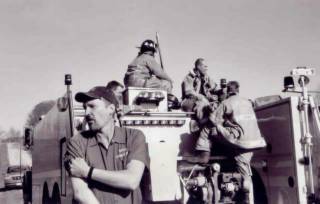
They do not see relatively fit peope huffing for air to keep up with their collectively pounding hearts as they trudge, laden with gear, across a field to put out the fourth grass fire within an eight-hour period.

Creek - FD
They do not have to face the survivors of an accident after zipping up the non-survivors in a body bag.
Creek FD GF
So going to this 'family' of volunteers to suggest changes in their routines, systems and procedures without approaching them at the very least for input is, to say the least, insensitive and can reinforce the perception that board finds their contribution is of negligible value.
In comparison, when there is news of farmers and farm families who are displaced by economic conditions or severe climate influences, we are saddened for their loss and we say "It is a way of life." and recognize that it is a part of an identity.
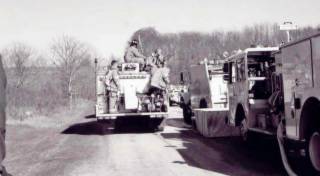
cfd rd
So it may be with those who respond to help their fellow man, never knowing who, when or what the circumstances. They are all pulled away from real life, to experience that which would be surreal for everyone else. They share the common experience and at the scene think in sync like members of a chamber music ensemble. As an observer, they appear as the reorganizing factor to life's moments of chaos.
It is likely that everyone wants to be on the same page when it comes to record keeping - an issue brought into discussion.
Positive changes are most often good, and the FD board primarily takes the overall good of the community as their chief motive for exploring these changes. But it must do so with sensitivity to the institutions that exist and the people who established them. They, after all, are also members of the community.
A review of the operations of both the fire department and the EMS may be warranted, but if one doesn't know what exists already how can changes be suggested? (The outcome could be that no changes are needed.) In short, it is wrong to avoid doing the leg work to at least appear to be interested enough to ask what is in place and what exists now.
As one firefighter said recently, "All they had to do was ask."
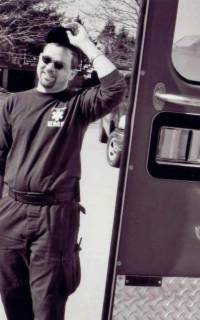
JD EMS
# # #
Best to all,
Lloyd
Both conversations made sense, but not as a response to the other side.
In all honesty, the verbiage coming from the board side made more sense than anything they've spewed over the past two years. And the volunteers have been stating the same concerns for years, which appear to fall on deaf ears.
Now don't forget that a large component of this blog is commentary, but it is commentary based on a fair amount of homework and observation.
You may have heard this before
At the annual meeting the second rehash of a proposal to reorganize the community fire department was put forth. The Johnson Creek Community Fire Department is organized in a manner different from most. This story has been told several times, but often still the response is a wincing question mark, so here it is again:
The current Johnson Creek community fire department was organized in the 1960s as a corporation of sorts so that the village of Johnson Creek, could share the capitol costs with the other outlying townships it serves - Aztalan, Milford, Concord, Farmington and Watertown. At that time they set up the corporation with a board that consisted of the chair or president of each of those communities. Each fire board member is able to cast one vote.
To a certain extent the structure became somewhat of an afterthought, because the firefighters (and since then the EMS developed as well) are the ones in the field when the pagers go off. The implications are that they meant for things to go this way, because the Johnson Creek Mutual Hose Company was the vehicle for continuity as the original FD and the continuing organization of the personnel. Otherwise, why wouldn't they have disbanded the Mutual Hose Company back in the 1960s when the intergovernmental corporation was first formed?
It is almost as if the people in 1961 said, "Okay, this makes it formal so we share the cost of the gear and property, but you guys go ahead and just keep putting out those fires the same as usual."
The Mutual Hose Company, which dates back to the 19th Century, was left to run things and attend to those pesky fires and other life threatening situations while the board evolved (with a few potential refreshing exceptions) into a roly-poly group who would go to meetings twice a year to rubber-stamp the budget, unless there were proposed increases, and to make sure the Fire Station was still standing.
It was presumed that systems for accomodating emergencies -- being compliant with regulations, scheduling and providing training, filling out paperwork, maintaining equipment, accomplishing fire inspections, and a whole host of other activities that need to be done -- would fall on the people who attend to those emergencies and day-to-day tasks.
So the volunteers did just that. They made sure there was a continuity and necessary upgrades, and whenever they were alerted they reponded to the actual emergencies. When the need and opportunity to start and develop an EMS came along, the FD picked up that gauntlet. The local EMS has since evolved into a group of volunteers with standards to which others aspire and try to maintain.
Early on there were friendly understandings, because all of the communities were similar. They were either farming townships or, in the case of the village, a community that supported farming. But now the communities' complexions have changed and the board hasn't.
Now the village has a major mall and other commercial interests in addition to increased industry. The Interstate Highway System was just beginning to take shape in this nation when the Community Fire Department formed, but now it is a major traffic corridor requiring several emergency responses per year. Consequently the village pays the largest percentage of the FD budget.
For those who have gotten used to this over the past four decades, just a reminder that the majority of communities have developed their emergency services differently.
Here's how it works with most other FDs:
Some of the same townships who have board members on the Johnson Creek Community Fire Department Board need fire coverage from other departments. For example - Aztalan also needs fire protection services from Jefferson and Lake Mills fire departments. In their case, the Lake Mills and Jefferson departments simply submit a bill to Aztalan and the township pays it. They have no say on what those fire budgets will be.
But at the same time, the chairs of those townships come to the 'Creek FD Board and determine what the rest of their fire protection budget can be, possibly after the bills from the other FDs are paid.
Now, just as we learned in Sociology 101, in times of transition are the greatest potential times of turmoil.
There are likely many good things about the proposed new intergovernmental agreement, which most would agree needed an upgrade. The board will go from six members to eight, adding two more votes for the village. This makes the balance of things a bit more equitable, in view of the fact that the village pays 47 percent of the FD price tag.
Another concern has to do with accounting for equipment, issues of depreciation and so on. There has been no proportionate inventory accounting divvying up the property amongst the communities in the recorded past. In addition, tax issues related to the honoraria volunteers get for making emergency runs have to be taken care of by a central responsible party.
And so the plan, primarily authored by village attorney James Hammes has many good facets, addressing archaic issues to bring them up to date. The fact that extra attention and a proposed change came to light is a good thing in many ways. It indicates that the make-up of the board could be changing with a couple of members who realize that as times change so do upgrades to community services.
But those members realize that change can be slow - witness the decisions on location and plans for a new public safety facility, which has been a roller coaster ride of indecision on the part of the majority of the board.
But according to recent documents, the propsed plan is to follow a model agreement established by the Wisconsin Towns Association. It is a good and solid document, BUT even the framers of the model agreement likely did NOT consider that there would be a volunteer Fire Department/EMS with a six-way ownership split. Hammes and Attorney Andy Griggs feel the agreement will be solid in terms of community responsibilities.
However, Hammes, at the beginning of the recent meeting also tried to address operational issues within portions of the agreement. And this is where homework, diplomacy, history and common sense all need to work in concert even to make a decision to address the matter of operations. This entails the second conversation.
Think for a moment of the volunteers in the fire department and EMS.
Historically they were told, "Just keep doing what you do." So they do what needs to be done to set up systems, elect their leadership, establish routines, comply with regulations, be available to the community for additional tasks and basically attend to emergencies for four decades.
One could equate it to an orphan family that raised itself, established its own routines and figured out ways to take care of itself and others. And they learned to support each other - they recognize their best with their own award ceremonies, and developed a support system to address issues after facing trauma scenes head on without no questions asked.
They do this with a board that, until the most recent board, only peeked in for a couple meetings a year, giving very little feedback, no additional recognition and by all appearances forgetting that they are dealing with volunteers. Yes, they now get an hourly honorarium for the time they are pulled away from family or work. But that amounts to less than a teenager gets paid at McDonalds. While accounting and tax records suggest that the they are 'employees' for purposes of record keeping, they are still volunteers. And most of the volunteers have said that it is not about the money, and they often forget that they are to be compensated when the check arrives.
But according to personal accounts, history can't tell when the last time the community fire board collectively said - "We appreciate your service to this community." or handed them a plaque or any recognition elevating the members from a status that appears they feel is a necessary evil. Having asked about more distant history, volunteers can't remember a time the board approached the volunteers and said point blank - "You are doing a great job and want you to know what you need to keep it up?"
Yes things cost more, and yet the attitude of the board appears to be that the volunteers are the cause of those increases. The board still has latitude with this department in comparison to the non-negotiable bill the townships get from the other departments.
Does anyone realize how difficult it is to be a volunteer for anything and have to justify the needs of your services to a board or committee to allow you to provide a service? Think of it this way... you have a neighbor who asks you to help him change his second floor storm windows. Being a good neighbor you cordially agree, and suggest that Saturday morning will be a good time to help. At that point the neighbor indignantly replies, "Oh, it can't be Saturday morning, I'm very busy then." So you suggest another time, but the neighbor says, "Do you expect me to accommodate you and your schedule so that you can help me work on my house!?! And by the way, you'd better have a ladder." Kind of Salvador Dali logic, and sometimes it seems that way with the FD board.
There is nothing saying that any of the firefighters or EMS personnel have to stay members, yet they do. That's what makes them volunteers. So what makes them stay? This is a question to which board members should seek an answer, because if the volunteers begin to ask that question it may be too late.
The majority of the board does not live within earshot of the fire and EMS facility.
They do not hear the sirens on cold February mornings before sunrise when a blinding blizzard continues to cover roads with drifting snow, yet they respond to unknown emergencies in these sub-zero temperatures.
They do not hear the pagers when the dispatcher calls for them to respond to a traumatic farm accident involving a pre-school age child.
They do not see relatively fit peope huffing for air to keep up with their collectively pounding hearts as they trudge, laden with gear, across a field to put out the fourth grass fire within an eight-hour period.
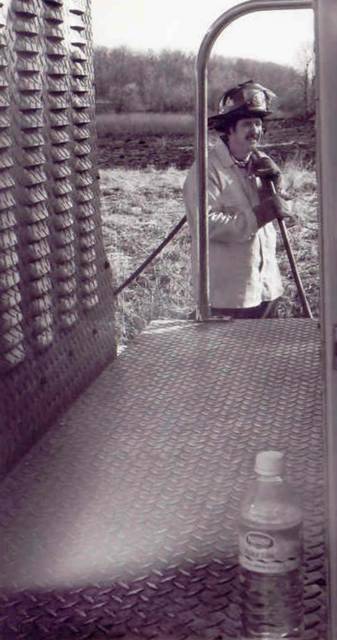
Creek - FD

They do not have to face the survivors of an accident after zipping up the non-survivors in a body bag.
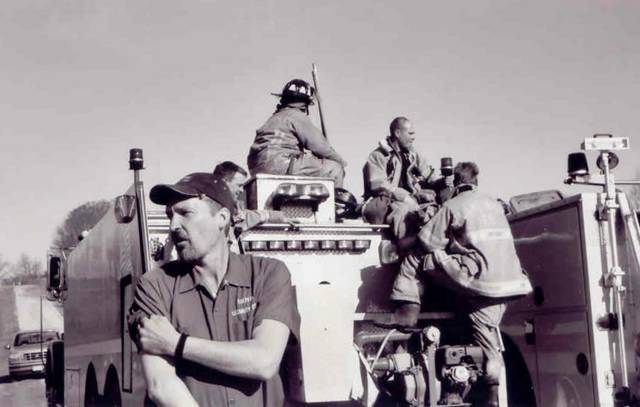
Creek FD GF
So going to this 'family' of volunteers to suggest changes in their routines, systems and procedures without approaching them at the very least for input is, to say the least, insensitive and can reinforce the perception that board finds their contribution is of negligible value.
In comparison, when there is news of farmers and farm families who are displaced by economic conditions or severe climate influences, we are saddened for their loss and we say "It is a way of life." and recognize that it is a part of an identity.
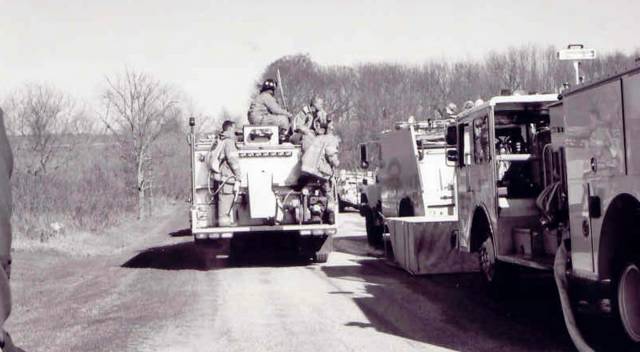
cfd rd
So it may be with those who respond to help their fellow man, never knowing who, when or what the circumstances. They are all pulled away from real life, to experience that which would be surreal for everyone else. They share the common experience and at the scene think in sync like members of a chamber music ensemble. As an observer, they appear as the reorganizing factor to life's moments of chaos.
It is likely that everyone wants to be on the same page when it comes to record keeping - an issue brought into discussion.
Positive changes are most often good, and the FD board primarily takes the overall good of the community as their chief motive for exploring these changes. But it must do so with sensitivity to the institutions that exist and the people who established them. They, after all, are also members of the community.
A review of the operations of both the fire department and the EMS may be warranted, but if one doesn't know what exists already how can changes be suggested? (The outcome could be that no changes are needed.) In short, it is wrong to avoid doing the leg work to at least appear to be interested enough to ask what is in place and what exists now.
As one firefighter said recently, "All they had to do was ask."
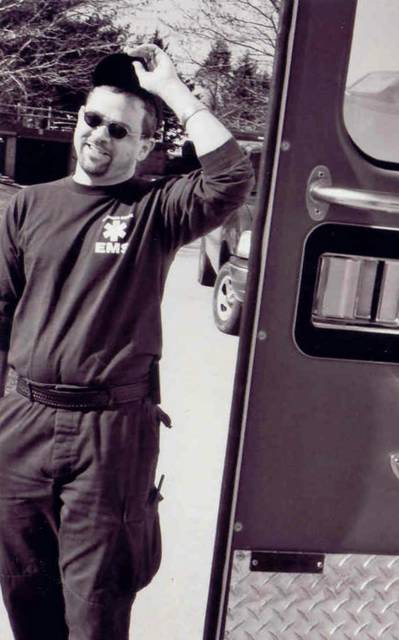
JD EMS
# # #
Best to all,
Lloyd
Subscribe to:
Posts (Atom)