Note: Often readers send email messages to the editor which include comments that could be beneficial to all of the Fieldtrip readers. All comments are welcome, and input is appreciated. Fieldtrips also features a reader comment opportunity at the end of each 'blog' message. You are welcome to leave a message there as well. One aspect of the end-of-blog comment section is the ability to leave a comment anonymously. When that option is chosen, even the editor is prevented from knowing the identity of the comment author. Readers are encouraged to use any of these options.
Regards,
Lloyd
29 November 2004


Giving thanks IS good for you
"Happiness cannot be traveled to, owned, earned, worn or consumed. Happiness is the spiritual experience of living every minute with love, grace and gratitude." --Denis Waitley
A growing number of studies indicate that saying 'thank you' or expressing gratitude otherwise is good for your health.
Almost every foreign language class offered has a common thread beyond declension and verb forms, and that common thread is courtesy. Traveling around the world, in almost every locale basic please and thank you is nearly a second nature practice.
But for some reason this is less likely the case when we learn our own language. And even though there is a national holiday dedicated to the idea of giving thanks, it often ends up being a study in the glory of gluttony, a day of feast and football.
Gratitude: It's good for you
As it turns out, if actually taken as the Thanksgiving Day holiday's name implies, it can be a matter of public health. It could almost be part of a campaign, "Stop smoking, eat healthy foods, exercise and say thank you."
More and more studies are backing this up with evidence that expressing gratitude is good for your health and well being.
In an article Rx for life: Gratitude (click) Greg Easterbrook delineates:
It is becoming a major area of the study of psychology and the contributing factors to mental health.
In another article the at the American Communications Project, Gratitude Theory is discussed:
It is interesting to note that psychology really doesn't focus on peoples' problems until it is in a clinical setting. The rest of the field is analytical and studies what is in human behavior -- that people generally are designed to know satisfaction and to be happy.
A key to happiness
Being thankful is a key to happiness, another area of expanded psychological study. A UC Davis study by Robert Emmons cites evidence that gratitude contributes to both a higher level of happiness, but also a greater sense of physical well being.
The study itemizes characteristics of people who incorporate a sense of gratitude into their lives:
A growing number of studies indicate that saying 'thank you' or expressing gratitude otherwise is good for your health.
Almost every foreign language class offered has a common thread beyond declension and verb forms, and that common thread is courtesy. Traveling around the world, in almost every locale basic please and thank you is nearly a second nature practice.
But for some reason this is less likely the case when we learn our own language. And even though there is a national holiday dedicated to the idea of giving thanks, it often ends up being a study in the glory of gluttony, a day of feast and football.
Gratitude: It's good for you
As it turns out, if actually taken as the Thanksgiving Day holiday's name implies, it can be a matter of public health. It could almost be part of a campaign, "Stop smoking, eat healthy foods, exercise and say thank you."
More and more studies are backing this up with evidence that expressing gratitude is good for your health and well being.
In an article Rx for life: Gratitude (click) Greg Easterbrook delineates:
* People who describe themselves as feeling grateful to others and either to God or to creation in general tend to have higher vitality and more optimism, suffer less stress, and experience fewer episodes of clinical depression than the population as a whole. These results hold even when researchers factor out such things as age, health, and income, equalizing for the fact that the young, the well-to-do, or the hale and hearty might have "more to be grateful for."
* Grateful people tend to be less materialistic than the population as a whole and to suffer less anxiety about status or the accumulation of possessions. Partly because of this, they are more likely to describe themselves as happy or satisfied in life.
* In an experiment with college students, those who kept a "gratitude journal," a weekly record of things they should feel grateful for, achieved better physical health, were more optimistic, exercised more regularly, and described themselves as happier than a control group of students who kept no journals but had the same overall measures of health, optimism, and exercise when the experiment began. (Researchers use frequency of exercise as a barometer for general well-being because it is an objective measure that links to subjective qualities; people who exercise three or more times per week tend to have better indicators of well-being, even when health conditions that affect the ability to exercise are factored out.)
* Grateful people are more spiritually aware and more likely to appreciate the interconnectedness of all life, regardless of whether they belong to specific religions.
It is becoming a major area of the study of psychology and the contributing factors to mental health.
In another article the at the American Communications Project, Gratitude Theory is discussed:
The results of the study indicated that daily gratitude exercises resulted in higher reported levels of alertness, enthusiasm, determination, optimism and energy. Additionally, the gratitude group experienced less depression and stress, was more likely to help others, exercised more regularly and made more progress toward personal goals. According to the findings, people who feel grateful are also more likely to feel loved. McCollough and Emmons also noted that gratitude encouraged a positive cycle of reciprocal kindness among people since one act of gratitude encourages another.
It is interesting to note that psychology really doesn't focus on peoples' problems until it is in a clinical setting. The rest of the field is analytical and studies what is in human behavior -- that people generally are designed to know satisfaction and to be happy.
A key to happiness
Being thankful is a key to happiness, another area of expanded psychological study. A UC Davis study by Robert Emmons cites evidence that gratitude contributes to both a higher level of happiness, but also a greater sense of physical well being.
The study itemizes characteristics of people who incorporate a sense of gratitude into their lives:
* Well-Being: Grateful people report higher levels of positive emotions, life satisfaction, vitality, optimism and lower levels of depression and stress. The disposition toward gratitude appears to enhance pleasant feeling states more than it diminishes unpleasant emotions. Grateful people do not deny or ignore the negative aspects of life.
* Prosociality: People with a strong disposition toward gratitude have the capacity to be empathic and to take the perspective of others. They are rated as more generous and more helpful by people in their social networks (McCullough, Emmons, & Tsang, 2002).
* Spirituality: Those who regularly attend religious services and engage in religious activities such as prayer reading religious material score are more likely to be grateful. Grateful people are more likely to acknowledge a belief in the interconnectedness of all life and a commitment to and responsibility to others (McCullough et. al., 2002).
* Materialism: Grateful individuals place less importance on material goods; they are less likely to judge their own and others success in terms of possessions accumulated; they are less envious of wealthy persons; and are more likely to share their possessions with others relative to less grateful pesrons.
Many of the techniques used by researchers and psychologists include keeping a gratitude journal, which one speculates is just a way of getting people in the habit of having this frame of mind. One may be able to regain the habit of gratitude in a variety of ways.
Benefit to all
Benefit to all
An interesting factor in expressing gratitude is that it is mutually beneficial. The idea of expressing anything implies that one is giving something away, and that can be a concept adverse to many. But in this case a commodity is given or shared where both members of the transaction benefit.
Seems like a good deal.
Thanks to all,
Lloyd
16 November 2004
FFA follow-up
Ah, when constabulary duty's to be done, to be done,
A policeman's lot is not a n'appy one, n'appy one.
-From Pirates of Penzance
by Gilbert and Sullivan
A policeman's lot is not a n'appy one, n'appy one.
-From Pirates of Penzance
by Gilbert and Sullivan
There are times when these lines from the G&S comic operetta could very well have been written about writers or journalists.
Something like:
When journalistic duty's to be done, to be done,
A reporter's lot is not a n'appy one, n'appy one.
A reporter's lot is not a n'appy one, n'appy one.
The vast majority of writing and shooting photos for readers is satisfiying, but every once in a while a straw is thrown on the payload that just snaps ones camel.
For those of you just getting here, back up one blog to
Wisconsin State FFA officers minus three (click)
This one refers to that one.
Seemingly, this was a straight forward piece of news. Having started in Wisconsin as an ag journalist, previous contacts in ag publications were a consideration in what was possibly significant news. Likewise, it was of interest to local mainstream news, because it involved local individuals.
News people develop a thick skin about many matters. One day we are doing a feature about a thimble collection, but on that same day may have to cover a fatal traffic accident, and be on the scene for both. No matter, because with some warning one can adjust a frame of thought to be prepared for both.
We strive for objectivity, but are still human. So reporters strive for complete objectivity, while balance can indeed be maintained. Still, would we want a fourth estate that was not human? Otherwise there would be little concern over the poignant efforts of the human condition, nor would journalists still in the field care about sharing inhumane conditions in various parts of the world.
News writers are merely the messenger, but it appears that simplistic thought has started to return to the "kill the messenger" mentality.
The piece referring to a shakeup in the Wisconsin FFA state officer team was written weeks after the situation emerged. Journalistic integrity put a hold on anything being written about the matter until there was a final outcome. Aware of the developing situation, the filter "is it news?" made it an easy bit of information to step away from.
When the final outcome surfaced the answer to the filtering question became an easy and explicit "Yes."
You may see journalists at meetings or public events and note that they are working, but most forget that gathering the data is about one-third of the work. After everyone else has left, people in the media are charged with doing follow-up homework and turning hours of talk into 500, 800, 1000 or more words. This is usually done under the thumb of a deadline.
It is easy to become impervious to comments or corrections, or even having a piece tossed out or torn up - and that can just be an editor's reaction. Commentary, correction and criticism of one's work is not a problem, because it must pass quality assessments that any product is subject to.
But, like any other position, personal attacks because one doesn't like the product are the journalistic equivalent of hitting below the belt in pugilistic terms
People should be encouraged to comment on issues with a printed piece, especially if there are legitimate inaccuracies. This is a luxury of community news - those who gather and report the news will be available in the future and have an accountability incentive to their subjects and their readers.
But there really is no excuse or reason for attacking a reporter personally because he/she wrote something an individual considers bad news.
Simply put:
The reporter can't help it if you simply don't like the news!
And such is the case with the recent news of the FFA state officer team.
There are times when it is better to get something out in a timely manner with fresh information before time can dilute a story. And of course if news sits, it really is no longer news. Note that the time stamp on the piece is shortly after 4 a.m.
After completing the piece, various news outlets were notified of the information on a 'take-it-or-leave-it' basis. All expressed their gratitude for the info, but said it is likely they'd make their own story, using this blog as an original source.
Monday a DPI representative sent an email that attacked the reporter and made a judgement on the motives for writing the piece. It was again, one of those times when the attack was on the person and not the work. Such actions can be hurtful and leave an impression that is slow to depart.
Email from DPI (click)
The response speaks for itself:
Response to DPI letter (click)
The next morning the official press release came attached to a subsequent empty email:
Offical press release
The well written press release created a sense of bewilderment, because the original article said essentially the same thing as the press release.
Speculation remains over where the article is inaccurate enough to be considered a seditious act against the FFA.
One possibility is a reference in the article that Robert's Rules were not followed. It was hard to believe as it was written because the organization as a whole excels in procedure. But four sources present at the event and an independent concurred that according to Robert's, to deny the rights of a member, or to dismiss someone in a "Trial of a Society Member," a two-thirds vote is required. Not to further pick nits, but this also almost requires the presiding officer to divulge the vote count. So the initial conflict to question was that Robert's would be used, BUT majority would determine.
Another point that may deserve clarification is the difference between resignation and dismissal. This was a point of mutual confusion, but in a situation where a governing body determines if you should or will resign, is it not tantamount to a dismissal? Additionally, the FFA policy specifically uses the word dismissal.
A possible area of more speculation has since emerged. In addition to admirably arguing on behalf of his colleagues, the third officer to resign first stated that he too had committed an infraction that warranted dismissal. None of my sources divulged specific information beyond the fact that he had resigned.
Reiterating a support for FFA, writing the article was a difficult task where absolute diligence was used to neither favor nor detract.
Instead of complaining about any specific discrepancies in the article, the letter sought decidedly to figuratively hit below the belt. Among the personally demeaning statements used by a person of authority in this situation was the explicit inference that there was a motive to see the demise of an important and fine organization. Nothing could be further from the truth, thereby multiplying the insult.
# # #
Lloyd
11 November 2004
Wisconsin state FFA officers minus three
The Wisconsin state FFA officer team is without a treasurer, a sentinel and a vice president after a special closed session meeting of the state FFA executive board in Mauston Wednesday. The board dismissed two of the state officers, and a third resigned.
During a special closed session, the state FFA executive board dismissed sentinel Jake Cramer of Johnson Creek and vice president Kristian Schmalzer of Mazomanie from the team of officers. The state FFA executive board consists of the officers, their home advisors along with ex-officio members Cheryl Zimmerman, executive director of the FFA center in Spencer, and Dean Gagnon ag education consultant with the Wisconsin Department of Public Instruction.
Immediately after the meeting treasurer Josh Duley of Merrill resigned.
The state FFA officer team is made up of FFA members, most of whom are sophomores and juniors in college, who often take off a year from school to serve at the state level. They are duly elected by members of their section, one of the ten geographical divisions in the Wisconsin FFA organization. The organization has more than 16,000 members statwide.
The special meeting was called after Cramer and Schmalzer were accused of drinking at a private function near the University of Wisconsin River Falls in mid October. State officers are required to sign acknowledgement of a policy for state officers that disallows alcohol use during their year as state officers.
The policy signed by each state officer lists reasons for dismissal. One of them states:
The policy does not differentiate between 'unofficial FFA activities' and non-FFA activities.
Later in October, the afternoon before the Wisconsin FFA officer team was to travel to the national FFA convention in Lousiville, KY, Zimmerman called Cramer and Schmalzer to inform them she had learned of the infraction. Zimmerman notified the two that they were on suspension, preventing them from accompanying their fellow officers to the convention. She also instructed Cramer and Schmalzer to email a letter explaining why they weren't a part of the trip, and gave them explicit instructions not to send the message to their colleagues. The FFA officer team was notified of the reason for their absence after their arrival in Louisville.
Shortly after their letters arrived Gagnon supported the decisions of the two officers in question by communicating via a return email and concluding:
After returning from the convention Zimmerman communicated with Cramer and Schmalzer informing them she had made appointments for them each to meet separately with Gagnon at the DPI office on November 4.
Zimmerman did not notify the officers of the nature of the appointment. She too was present at the meetings. Upon their arrival on November 4, Cramer and Schmalzer were asked to sign pre-written resignations.
Both Cramer and Schmalzer refused to sign the resignations, and their decisions were supported by their home advisors Ed Bielinski, FFA advisor and ag instructor at Johnson Creek Schools, and Kim Houser, FFA Advisor and ag instructor at Wisconsin Heights High School.
Cramer cited lack of due process as his reason for refusing to sign. Additionally, both Cramer and Schmalzer noted that they were caught off-guard by the resignation requests. Neither of them, however denied the policy infraction, and remained apologetic for the lapse in judgment.
Looking into the state officer policy, directly after the behavior stipulations the language states:
"We were told to stay out in the hallway," Cramer said, explaining that it was all in closed session and that they were excluded.
A communique setting the time for the special executive board meeting noted that Roberts Rules would be the parliamentary authority, but many attending maintain that the rules weren't adhered to. Again, members of the team were instructed not to communicate with each other about the matter, even though administrative personnel maintained communication.
Bielinski noted procedure barely followed a form of order pointing out more than one discrepency. The Johnson Creek Agriculture instuctor has coached parliamentary procedure teams, many to the state level competition. He stated that advisors who couldn't attend the special meeting were called and asked to vote even though they weren't present for debate. Additionally the vote count was not disclosed to those in attendance except to reveal that the two members had been dimissed.
Discouraged with the outcome, and previously supportive of his colleagues, Josh Duley of Merrill resigned his office.
In an earlier communication Duley made a several pleas on behalf of Cramer and Schmalzer.
"You likened your choice to not let them attend the National Convention off of the WIAA sports book. When an athlete breaks the code of conduct they are asked to miss the next game," he wrote to Zimmerman and Gagnon. "I urge you to look at Jake and Kristi's passion and and dedication to the organization."
Duley noted that it should be a time to celebrate, because the National FFA President is from Wisconsin.
"Firing two FFA state officers will definitely not add to the positive image of the FFA," Duley added.
Currently, plans are for the remaining eight officers to finish the year. The state FFA geographically divides the state of Wisconsin into 10 sections, with each officer representing their section and holding state office. The president is elected from the previous year's team of officers. Each officer is elected through an interview process, then elected by FFA members from their section.
Advisors from each officer's home chapter host and arrange for section workshops and training sessions. Their responsibilities in light of the current situation is not defined.
According to Zimmerman, in the 70 plus year history of the state FFA organization, this is the first time state officers have been caught or admitted to this level offense.
# # #
(NOTE:Contacts - feel free to verify.)
Dean Gagnon - DPI - 608.267.9255
Cheryl Zimmerman - FFA Center - 715.659.4807
Ed Bielinski -
FFA advisor Johnson Creek Schools - 920.699.3481school
Kim Houser -FFA advisor Wisconsin Heights High School -608.767.2586
Jake Cramer - cell 920.219.1272
Kristian Schmalzer - 608.795.9869
During a special closed session, the state FFA executive board dismissed sentinel Jake Cramer of Johnson Creek and vice president Kristian Schmalzer of Mazomanie from the team of officers. The state FFA executive board consists of the officers, their home advisors along with ex-officio members Cheryl Zimmerman, executive director of the FFA center in Spencer, and Dean Gagnon ag education consultant with the Wisconsin Department of Public Instruction.
Immediately after the meeting treasurer Josh Duley of Merrill resigned.
The state FFA officer team is made up of FFA members, most of whom are sophomores and juniors in college, who often take off a year from school to serve at the state level. They are duly elected by members of their section, one of the ten geographical divisions in the Wisconsin FFA organization. The organization has more than 16,000 members statwide.
The special meeting was called after Cramer and Schmalzer were accused of drinking at a private function near the University of Wisconsin River Falls in mid October. State officers are required to sign acknowledgement of a policy for state officers that disallows alcohol use during their year as state officers.
The policy signed by each state officer lists reasons for dismissal. One of them states:
Any use of alcohol, and/or supply of alcohol to members or others. State FFA officerswill forego all alcohol while involved in official or unofficial FFA activities from the day the officer is elected until he/she installs a new state officer. This means 24 hours a day,
7 days a week for 365 days. This means anywhere within the United States and any International travel.
The policy does not differentiate between 'unofficial FFA activities' and non-FFA activities.
Later in October, the afternoon before the Wisconsin FFA officer team was to travel to the national FFA convention in Lousiville, KY, Zimmerman called Cramer and Schmalzer to inform them she had learned of the infraction. Zimmerman notified the two that they were on suspension, preventing them from accompanying their fellow officers to the convention. She also instructed Cramer and Schmalzer to email a letter explaining why they weren't a part of the trip, and gave them explicit instructions not to send the message to their colleagues. The FFA officer team was notified of the reason for their absence after their arrival in Louisville.
Shortly after their letters arrived Gagnon supported the decisions of the two officers in question by communicating via a return email and concluding:
I am very pleased that you admitted your misjudgment and did not attempt to deny your actions. That is a sign of a strong character.
After returning from the convention Zimmerman communicated with Cramer and Schmalzer informing them she had made appointments for them each to meet separately with Gagnon at the DPI office on November 4.
Zimmerman did not notify the officers of the nature of the appointment. She too was present at the meetings. Upon their arrival on November 4, Cramer and Schmalzer were asked to sign pre-written resignations.
Both Cramer and Schmalzer refused to sign the resignations, and their decisions were supported by their home advisors Ed Bielinski, FFA advisor and ag instructor at Johnson Creek Schools, and Kim Houser, FFA Advisor and ag instructor at Wisconsin Heights High School.
Cramer cited lack of due process as his reason for refusing to sign. Additionally, both Cramer and Schmalzer noted that they were caught off-guard by the resignation requests. Neither of them, however denied the policy infraction, and remained apologetic for the lapse in judgment.
Looking into the state officer policy, directly after the behavior stipulations the language states:
If any of the above violations occur, the state officer or officers will be asked to appear before the entireState FFA Executive Board to give a complete explanation of the incident which occurred. The StateFFA Executive Board will then rule on a dismissal of the officer or officers involved.While allowed to restate their admission, Cramer and Schmalzer were not allowed to hear or be part of debate on the matter.
"We were told to stay out in the hallway," Cramer said, explaining that it was all in closed session and that they were excluded.
A communique setting the time for the special executive board meeting noted that Roberts Rules would be the parliamentary authority, but many attending maintain that the rules weren't adhered to. Again, members of the team were instructed not to communicate with each other about the matter, even though administrative personnel maintained communication.
Bielinski noted procedure barely followed a form of order pointing out more than one discrepency. The Johnson Creek Agriculture instuctor has coached parliamentary procedure teams, many to the state level competition. He stated that advisors who couldn't attend the special meeting were called and asked to vote even though they weren't present for debate. Additionally the vote count was not disclosed to those in attendance except to reveal that the two members had been dimissed.
Discouraged with the outcome, and previously supportive of his colleagues, Josh Duley of Merrill resigned his office.
In an earlier communication Duley made a several pleas on behalf of Cramer and Schmalzer.
"You likened your choice to not let them attend the National Convention off of the WIAA sports book. When an athlete breaks the code of conduct they are asked to miss the next game," he wrote to Zimmerman and Gagnon. "I urge you to look at Jake and Kristi's passion and and dedication to the organization."
Duley noted that it should be a time to celebrate, because the National FFA President is from Wisconsin.
"Firing two FFA state officers will definitely not add to the positive image of the FFA," Duley added.
Currently, plans are for the remaining eight officers to finish the year. The state FFA geographically divides the state of Wisconsin into 10 sections, with each officer representing their section and holding state office. The president is elected from the previous year's team of officers. Each officer is elected through an interview process, then elected by FFA members from their section.
Advisors from each officer's home chapter host and arrange for section workshops and training sessions. Their responsibilities in light of the current situation is not defined.
According to Zimmerman, in the 70 plus year history of the state FFA organization, this is the first time state officers have been caught or admitted to this level offense.
# # #
(NOTE:Contacts - feel free to verify.)
Dean Gagnon - DPI - 608.267.9255
Cheryl Zimmerman - FFA Center - 715.659.4807
Ed Bielinski -
FFA advisor Johnson Creek Schools - 920.699.3481school
Kim Houser -FFA advisor Wisconsin Heights High School -608.767.2586
Jake Cramer - cell 920.219.1272
Kristian Schmalzer - 608.795.9869
03 November 2004
Losing sight of the basics
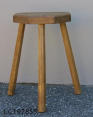
Is our government a three legged
or one legged stool?

In the ferver of a political campaign one can become blind to the basics. In fact there were times during the most recent political contests, on both sides, when a pervading need to win superseded the need for studious reasoning to back up a vote.
That kind of thought is acceptable during the Super Bowl game, but when you are one of the electorate populace deciding the future of the nation, and possibly the planet, voting one way without studied reflection is like taking a side based on the color of the uniform.
It is not difficult to accept the outcome of an election. In many ways, no matter what the outcome it is a reason to celebrate. Still the outcome of the most recent elections should be of concern to everyone, not necessarily because of a difference in political ideology, but because it runs against proven models of success found in social, business, scientific and environmental settings.
In nature it is essential that a variety of animals and organisms exist to give a base to the environment. Adding too many of one species or removing too many of another makes the system unstable. Conditions such as these may be the cause for the predominance of Chronic Wasting Disease among the deer population, as an example.
Communities must also be diverse to remain dynamic and viable. A community with nothing but dwellings is little more than modern day ghost town, and doesn't promote the social or economic needs of a healthy municipality anymore than a city that is made up of a variety of factories, two homes and nothing else. That mix or lack of mix would more than likely be called an industrial park.
In business and finance, among the basic tenants is the need to remain diverse in order to stay flexible and to keep options open, so that all ones' eggs do not end up in the same basket.
Recently philanthropist George Soros gave a talk at the National Press Club. He said:
An open society such as ours is based on the recognition that an understanding of reality is inherently imperfect.
Nobody is in possession of the ultimate truth.
As the philosopher Karl Popper has shown, 'The ultimate truth is not attainable even in science. All theories are subject to testing and the process of replacing old theories with new ones never ends.'
Faith plays an important role in an open society. Exactly because our understanding is imperfect, we can't base our decisions on knowledge alone. We need to rely on belief - religious or otherwise - to help us make a decision.
But we must remain open to the possibility that we may be wrong so that we can correct our mistakes. Otherwise we are bound to be wrong.
The outcome of the recent election concentrated on the presidency. While the choice was satisfactory to some and unacceptable to others a larger concern exists.
We now have a national government in the control of one party - the legislative, the executive and the judiciary - all three branches (albeit the judiciary is supposed to be impartial). It doesn't matter which party it is, this is a situation that by all models is unstable. This is a situation that is very dangerous, because, like the models in nature, sociology and finance, it lacks diversity. It is an imbalance that lacks stability like a one legged milking stool. It is one that will be less likely to promote discourse and render creative solutions.
This leaves us, their collective boss, to remain vigilant. To insist on open debate, and above board decision making. We need to make sure that they do not get too comfortable, and we need to remind them constantly that their work should result in a collective wisdom and NOT the lowest common denominator.
Even debating among colleagues from the same party '... they must remain open to the possibility that they may be wrong, so they can correct their mistakes. Otherwise, they are bound to be wrong.' And we must be vocal and immediate in pointing out those possibilities.
Best to all,
Lloyd
27 October 2004
Don't mess with this piece of real estate
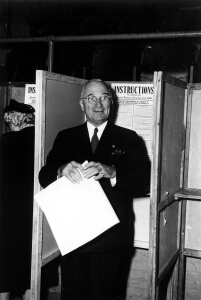
Truman leaves a voting booth
the day of the 1948 elections.
Once a government is committed to the principle of silencing the voice of opposition, it has only one way to go, and that is down the path of increasingly repressive measures, until it becomes a source of terror to all its citizens and creates a country where everyone lives in fear.
--Harry S Truman, August 8, 1950
The 33rd President of the United States also said that the voting booth is the most valuable piece of real estate in the nation, and that if it is sold then likely the nation will cease to exist.
It is unfortunate that underhanded events have happened in several of the nation's campaigns over time. Even if it yielded a win for the perpetrators, the behavior of an administration during a term would demonstrate whether they would win a subsequent election.
For most parts of the nation this has been the safety net, because the citizens and politicians have given the voting booth, the polling place and the a ballot box a near sacred status.
Throughout history candidates have simply encouraged people to vote, even without telling followers to vote specifically for them, knowing that the secret ballot with one vote per person has been the single most important right of a US citizen. In many ways it is what defines a US citizen as different from being a member of any other country.
During the 2000 national elections questions arose over which candidate won. As it turned out, even the side that won admits that the number of popular votes went to the opposition. But from the supreme court, wherein no one in the majority decision would put their name to a majority opinion, came a faceless decision in a 5 to 4 vote. (The dissenters, however had no fear of writing an opinion.)
While we have questioned the Electoral College many times as the process for deciding presidential elections during the past couple centuries, in 2000 we accepted the results of the vote as a matter of faith. This faith was held with the assumption and assumed knowledge that in four years we'd have another chance to cast our ballots.
We knew that in four years, as in every other election cycle, that if there were problems or if there was an opportunity to change the management of this nation for the better, we the electorate would be able to cast our ballots as we always have and know that the wisdom of a majority would be respected as each ballot would be given equal weight, equal importance and respected as a revered right.
In this nation we don't tamper with the US Mail, because it is a "Federal Offence" an important common knowledge that is a combination of mutual respect and security. Similarly, there is not a preponderance of counterfeiting of currency - even though today's design and printing technology would make attempts much easier.
So it has been with voting and the ballot box. Neighbors have respected each other when they knew a difference in political leanings, and if they wished to keep that difference confidential it was another form of mutual respect maintained by the voting booth and the secret ballot.
As this country has grown, history has corrected election improprieties in various regions. In most areas they serve as reminders that systems in this democracy work.
Following the flame of principle established by the nation's founding documents state, "...all men are created equal," the Voting Rights Act of 1965 with its subsequent revisions recognized that the last single descriptor of being a citizen -- the thing that makes one whole, to make all citizens whole -- was the unalienable right to vote without being impeded and with no differentiating qualification.
It was as if to say, "even if we can't help everyone's economic plight, even if we can't correct all social injustice, even if opportunities are not always equal, the single most important thing we can do is assure the right to vote to all, and protect that right by making the result of the plebiscite elective self expression so important that it is untouchable, and to do otherwise unthinkable."
I see in the near future a crisis approaching that unnerves me and causes me to tremble for the safety of my country. . . . Corporations have been enthroned, an era of corruption in high places will follow, and the money-power of the country will endeavor to prolong its reign by working upon the prejudices of the people until the wealth is aggregated in a few hands and the Republic is destroyed
------Abraham Lincoln
With days remaining before the next election, verified reports are emerging of tampering with voter registrations, ballots, the disposition of absentee ballots and challenging individual electors using or manufacturing false information about them.
THIS IS NOT A PARTISAN RANT! These are actions that should be abhorred equally by both sides, for the devaluation of one vote diminishes the rights of all, and threatens subsequent elections. While it is becoming apparent that one side is perpetrating these acts against fellow citizens, one would think the questions that arose over the last election would have current leaders being extra diligent at avoiding even the appearance of impropriety.
With current actions showing a blatant disregard for the rights of fellow American citizens, the basic principles of logic confirm the likelihood that the discrepancies in question during the last election were purposely executed. Now we have come to believe that all find the act of voting, and the handling of ballots as near sacred, while those who don't are taking advantage and manipulating the outcome.
Here are some examples:
- With voting underway in Florida, eyes turn that way as a list of felons developed to disallow voters was not being released. During the 2000 election, a similar list was developed and included thousands of names of people who had no prison or police record, preventing those named on the list from their right to vote.
Click: The Herald Tribune
- A campaign headquarters document in Florida outlines a plan to disrupt voting in certain districts.
Click: BBC News: Florida vote scandal feared
- Not all concerns are taking place in the south. In an effort to limit the number of newly registered voters from actually casting ballots, Milwaukee County official refused to print the estimated 260,000 ballots requested by city officials.
Milwaukee Journal Sentinel
- This initial glitch was resolved after the Mayor, the Governor and the attorney general joined the debate, and Milwaukee County will now print the extra ballots required.
Milwaukee Journal Sentinel
The latest hassle facing voters in the area include absentee ballots which come with a stamped self addressed envelope. But by accident one of the remote voters had the post office check to see if there was enough postage. Most voters will assume that the 37 cent stamp supplied is adequate to get their vote to their home polls. After checking, it turns out the return ballot need additional postage to bring the amount up to 60 cents for the USPS to deliver the ballot to where they can be counted.
-Journal Sentinel - Wrong postage is latest absentee ballot concern
- In Nevada, an organization promoted registration of voters, but subsequently discarded all the registrations affiliated with one of the parties keeping people who thought they had registered from being allowed to vote.
Constitution Center
- Back to Florida, where today, 58,000 absentee ballots were misplaced in transit to Tallahassee
Local Channel 10
- And Ohio has started with a variety of voter concerns, perpetuated by officials who are to serve all of the electorate.
Columbus Free Press
- Along with blatant devaluation of ballots, redistricting and simple but purposed changing of voting locations, votes are being accepted and denied randomly along with provisional ballots that allow people to be pacified but confused until the judiciary in one sweep destroys all pertinent ballots (as they have done in several areas) rendering thousands of ballots invalid, and sweeping away the common thread that makes all of those individuals citizens.
AP - The wrong polling place
And there are more being reported daily.
But everyone, no matter what their affiliation should be infuriated by those who would use a single ill-gotten vote to their advantage, let alone hundreds of thousands.
With friends in both political parties, I know no one who in good conscience would condone such behavior. Members of both parties whom I know believe in decency and a sense of fair play. They know and believe that even if they disagree with the opposition's plans that their vote is just as important as everyone else's, and respect an honestly represented true majority. They also know that after an interval of time they will have the opportunity again to cast votes in a scenario that celebrates the differences, debate, discourse and trusts
They understand that the ballot box and the voting booth is one of the freedoms that people through our nation's history have fought, sacrificed and died for, insuring that this little experiment in self government succeeds to be enhanced by the next generation.
Until recently we looked with some condescension on other countries that required independent international observers in order to insure a fair election. When watching reports about those countries, we thought of ourselves as being beyond that with systems that worked and a society that was civil and conducted fair elections. But now it would be as if we were looking in a mirror.
Best to all,
Lloyd
.
15 October 2004
When a student learns it can be like...sailing
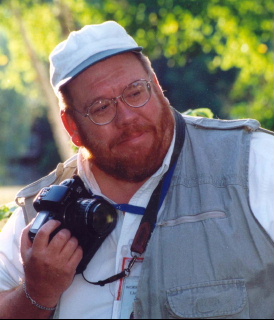
File photo: Lloyd
There have been many opportunities to act as a teacher over the years. As a music/theatre major I later took on private students who were studying/playing 'cello and a few voice students. While several were a bit of a struggle - and the struggle was theirs - many were successes and they were kind enough to share their success; a source of great thrill for most teachers making up for the energies expended on the struggles.
Most recently I had the opportunity to be a teacher in an interesting environment. The story below could be called "What I did on my Summer Vacation." But it is more about how everyone gains when skills and knowledge are shared.
The majority of the summer of 2004 was filled with one of two activities.
First, I have to say that I was in the weird position of having to take vacation from my regular work in order to finish contract work on a couple of specific projects. Read that again: I had to take vacation time in order to get my work done. A situation that could have have been depressing if it weren't for my other distraction, sailing.
Saying farewell to sailing early in my marriage was an easy tradeoff considering the number of things my sweetheart has put up with over the past three decades. But the urge to harness the wind and slide across the water returned in earnest a few years ago.
It all came down to the fact that my wife was not a water person, and instead of it being a source of sporting stimulation, water activities were a source of terror. Of course, if I'd known that, I'd likely have made her first sailing experience all those years back, a little less exciting.
A series of guilt-laden ploys over a period of time a few years back finally yielded the "thumbs up" on acquiring a sailing vessel, and returning to the life on water that I had left when Gerald Ford was president.
Not wanting to push the issue, I pursued a clunky looking boat that looked safe with an appearance that likely put its designer to sleep. Shortly after starting the hunt, I came home from a Chicago area marina with a 22 foot South Coast cruiser that had been pulled out of its slip in Lake Michigan. It fit the formula perfectly, a clunky looking sloop on which everything was present and intact, with a hull color that screamed 1971 as if the Brady Bunch itself was expected to swim across her bow. With the vessel a study in irony, it seemed only appropriate to Christen her "Pinafore" after the Gilbert and Sullivan comic operetta featuring a ship of the same name with a crew whose exploits should never be taken seriously.
In an effort to be concise I take license to time-travel to early spring 2004 when the stars aligned and a good friend made some contacts so Pinafore could be parked in Rock Lake near Lake Mills, affording me the opportunity to hit the water and hoist the sails within ten minutes after leaving my home.
But another opportunity presented itself with the boat's close proximity. My wife, one of my children (at first) and two of my friends showed a special interest in learning to sail, giving me the delightful challenge and opportunity of teaching them how to safely sail, show them some of the nuances and introduce those four to the enticements of sail. A built-in plus included the odds that shortly I'd have a crew member at any given time to help out when winds became brisk and efforts to 'single hand' Pinafore required that I be in more than one place on the boat simultaneously.
Just like students learning a new musical instrument, talents developed at varying speeds.
But one of the crew trainees displayed a particular enthusiasm, and became a part of the Pinafore crew almost by accident. On our way back from a shoot, a person whom I often hire to assist with freelance commercial photo work was with me at the end of the day when I mentioned that the boat was tied off not far from the route home. She insisted that she wanted to see the old cruiser. It never takes much arm twisting to get me to talk sailing.
I kept playing down the dated watercraft, but even after seeing the 'retro' cruiser she continued to ask substantial questions about the old boat and things nautical in general. Enthusiasm at this level is hard to surpress, so I offered to take the boat out and motor about for a short excursion.
Well we didn't even hoist the sails that trip and the good questions kept coming, so much so that I finally said, "Here, you take the helm," explaining that as the term for position of the person who steers the vessel - also giving her something to do before I ran out of answers. I mentioned that I would be training members as crew and that she (for the purposes of this blog she'll be known as CR as she often is in real life) was invited to join the group. I noted that the group was going to meet a in a few days and that she should plan on coming out, but I also mentioned that it wasn't just a matter of going out, setting sails and catching 'rays.' It was a matter of learning many safety aspects to protect the boat and other crew, it was a matter of learning terminology, rules, regulations, history, theory. It was also a matter of learning about the weather, learning the characteristics of this specific water craft. And finally a matter of having all the mechanical factors of harnessing the wind and getting the craft where you wanted to go become a natural series of readings and reactions.
While we planned to meet as a group a few days later, CR called the next day and said she had a conflict. Thinking that her apparent enthusiasm had waned, I said that she was certainly not obligated in any way. But she stopped me short and asked if the boat would be going out anytime before the group was to meet. Well, of course it was - that afterall is why I had the boat in water so close to home.
So we met the next day after I made the return trip from Chicago, having met with a client in the morning. Like air filling sails, sailing itself always gives me a second wind of energy. We spent some time at the pier where I explained the difference between standing rigging and running rigging. We talked over which lines did what, what needed to be accomplished while getting under way and generally what made a sailing craft...go.
As a little quiz, I asked if she could remember some of the specific parts of the boat. She did, and continued on impressively and correctly with more terms after I finished the little quiz. CR was like a horse at the starting gate, and I recognized that it was time as a teacher to get out of this student's way.
We motored out beyond keel depth, and as I was getting ready to hobble up on deck to hoist the sails she passed me up and asked if she could yank the halyards to raise the two expanses of Dacron (the canvas of today). I sat back down at the tiller and said, "hoist away." A brisk day gusting to 15 knots I stayed at the helm, but pointed out all of the factors to consider at every point of sail, giving assurance that cruisers this size with 700 to 1000 pounds of steel or lead in its keel are extremely difficult to capsize, even though the wind made the Pinafore heel over to near 20 degrees during the course of the session. While 20 degrees isn't much off of perpendicular, with racing yachts spending a brisk day at 30+/- degrees to the point where skipper and crew are basically leaning on the deck while standing on its edge, even 20 degrees can seem like more when a green sailor is along and the skipper seems to be daring Mother Nature to incline your craft much more.
After about two hours, I turned the boat in toward our pier to the dismay of the new student. Again CR volunteered to douse the sails. After explaining the procedure she litely jumped to the top of the cabin trunk as if she had a set of natural sea legs, where my hiking on deck in brisk weather has been characterized as more of a "lumbering" action. I turned Pinafore upwind and both the jib and mainsail began to luff. As the boat bit into the oncoming chops, CR cut loose the jib halyard and stood solidly on the foredeck as she gathered up the foresail. Returning to the mast she set the main halyard loose, I let go of the tiller and began to to flake and lash the mainsail. CR started lashing it from the other end. "Are you sure you haven't been sailing before?" I asked. She assured me that her life until then was one of a full blown land lubber.
The summer continued with planned trips including the group and various sub-sets, but regularly CR would have arranged her own schedule to get some extra time under sail. She remained enthusiastic, but it seemed that with everything she absorbed in the learning process, she also gained a greater respect for the sport. After several trips out as a crew member it became obvious that it was time for her to act as skipper and take the helm, and let me be the crew, telling me what adjustments out of her reach need to be made.
Suggesting it was a good time for her to take the tiller and take the boat through its paces with me as the crew, CR hesitated. She paused, and said she really should just continue as a crew member. With that, under full sail, I stood up and headed to the cabin, hinting that someone should take the tiller (at that time CR didn't know that sails sheeted tightly will generally pull the vessel around into the weather, bring the boat to a stop and drop the air out of the sail to the point where they'll simply flap around). She veritably dove for the tiller and brought Pinafore back on course, frantically asking what I was thinking. To which I answered "I think it is time you took the helm."
Again it is an exciting moment when a teacher gets the opportunity to get out of a student's way, and it was clear that this student was ready to move on faster than the rest of the crew trainees.
CR stiffly took the boat through several maneuvers and points of sail, before I suggested we head in.
After that CR would take the helm regularly under varying sorts of weather, learning to adjust to get the optimum set on the sails. At first it was a matter of adjusting after conditions changed blatantly, but the adjustment to any settings were always correct. Many sailors never get beyond this point.
Just as every student who is learning a new language works at it until "things just click," sailing fell into place for CR.
The difference between inland sailing and off shore ocean sailing is the quality and consistency of the wind. Most often in blue water sailing, the wind stays the same, is rarely gusty and usually changes at a pace that allows sailors to adjust as the changes are happening. I like to call off-shore mariners set-and-forget sailors. Inland wind is subject to more change due to winds coming off of land formations, a range of varying other factors and generally one accepts that there will be gusts, even at points 30 miles off-shore on Lake Michigan.
One day we were out after CR had become quite used to the routine and was familiar with almost all activities on the boat. So much so that I began to wonder if learning had hit a plateau, or if I had any more to offer this student.
The weather that day called for 7 to 10 knot winds, but predicted mid afternoon an increase of winds that would be 10 to 15 knots. On a comfortable set of tacks against a southwest wind we were heading across the narrowest point of the lake, an area notorious for providing conditions almost opposite the day's prevailing winds. I went into the cabin to grab binoculars, then stood up in the companion way, which allowed me to lean on the cabin roof and keep my head under the boom.
Going from a port tack to a starboard tack, I aimlessly looked through the glass. More than a mile away, on a cloudless day I could see that the water was turning dark, and the ink-like hue was advancing to our location rapidly. Immediately I knew that the dark shade was riffling on the current waves, taking away their glimmer and that the predicted wind change was coming across with a substantial introductory gust. I looked back at CR who was studying the set in the sails, and then bit my lip in an effort to not be too directive and continue to let the learning experiences happen. I did, however, work at being nonchalant and started ever so slightly to lean windward.
I took one more glance over my right shoulder, then let it go, looking toward the bow. About ten seconds later the wind picked up whistling through the shrouds. I prepared to jump through the hatch and cut loose a jib sheet, but knew that the old cruiser could heel beyond 90 degrees before thinking about capsizing, so I decided the best thing a teacher could do was nothing but wait.
Bracing myself as the wind hit, I felt Pinafore nudge slightly, but then settle into an increased speed. I relaxed as the boat locked into a comfortable beat, and we sailed on to the south end of the lake.
After we came about I stepped back out into the cockpit and sat on the weather side. After sitting and simply enjoying the sail for another ten minutes, I looked back at CR and said "Uh, did you notice the wind pick up before you came about?" She replied with a glib "Uh-huh."
I mentioned that we didn't really heel over too much. She replied, "Well I just flattened the main, and headed up wind a bit, then reclaimed the course as I let out the main sheet."
" And you did it well," I replied.
It occurred to me then that, like one who is learning a new language, things had 'clicked' for this student. I also realized that the role of a teacher is always changing. Sometimes it is a matter of literally spelling out every action, and sometimes it is just a matter of turning on a light so a student can see the path. The most difficult thing is recognizing which degree of need, so that a student is neither overwhelmed nor held back when ready to move on. But when a student finds success and feels accomplishiment, as a teacher I feel the thrill of a skydiver.
The training provided to new crew has been like a rank system that yacht trainers use on their way to a level of maritime certification. The next step for CR was to 'single hand' or solo sail, and she absolutely had the skills. However, like the first time she took the helm, I had to practically trick her into the solo sail. Every time I mentioned that it would be a good day for a solo run, she decided that her schedule was full, though I could hear that she wanted to be on the water under sail.
One day, I suggested we go out, and with the wind level up we'd likely have to 'reef' in the main (bring in some sail to have a smaller surface area), and I would need a decent crew to go out. After heading out I came around and brought the Pinafore in to a public pier. We were on approach before she asked why. Grabbing a cleat on the pier and stepping off the gun'l I threw a camera around my neck and turned back to tell her why... "...so you can solo."
She grabbed the pier and protested. "Lloyd, I'm not ready for this!"
I gently said that I thought she was.
"No, I'm really not. Now come on back. I'm not ready to solo."
Her hand slipped from the pier for a moment, and I took advantage of it by shoving Pinafore off. "Prove to me that you're not ready!," I said adding that it was near sunset and the weather was changing.
Shortly, the old cruiser was more than its own length beyond the pier. CR gave me a resigned look and asked what the assigned route was. I told her to head out on a certain heading south, bring it to the east on a broad reach go to within a safe distance of the east shoreline and come about to tack out the same distance to the south, then cut back west -southwest beating close to the wind then head west across the point of the pier, continue on then jybe north back to a point even with the pier and bring it on in.
I saw waypoints click in her head as if I were a choreographer dishing out steps to a dancer. She yanked the starter on the long shaft outboard, snapped it into reverse, pulled the stern around, changed gears again and headed out. It was the first time I had been this directive with this student.
The list of tasks to remember can be exceptional: After motoring out, killing the motor, lifting the motor, CR winches down the keel (a 700 lb five foot fin of steel on 2 tons of boat) , she hoists the sails, goes through the route making all the correct adjustments, then douses the sails, lashes the main, winches up the keel and motors back. She also made a correct decision in leaving the main reefed (note the main is almost the same size as the working jib), then she qeued up in a holding pattern with a boat that unexpectedly arrived to be hauled out. Then she brought Pinafore back to the pier.
She was elated and I was proud as punch. She also admitted that she was stalling about doing the solo over a period of weeks.
We were losing daylight, so shutter speeds on my camera were slow making it hard to hold steady, but if you click on the picture below, you will see CR on her solo sail. Clicking on the picture, you will be taken to another page. Click that new picture and you will see a 20 second compressed slide show of the 25 minute solo sail. Realize that it symbolizes a student success, a demonstration of determination to take on something completely new and the culmination of an effort to acquire new skills, pounding the individual skills into a complete talent.
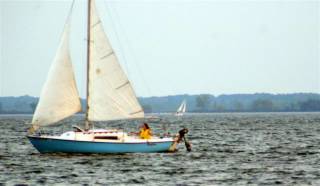
Solo sail for a former land lubber - click here then click on pic
at that site.
While acting as the teacher in this situation, as usual I'm sure I am the one who learned and gained the most.
Best to all,
Lloyd
14 October 2004
Block Schedule: Will it crumble?
This blog spends a lot of it's time on school matters. This happens for many reasons including the fact that there is a lot going on within the district, a learning environment is an exciting and interesting environment, and the energy of youth is generally contagious.
There are so many good things that can and do happen in public schools that one can feel the need to give change a little scrutiny, yet one of the exciting things that occur in schools IS change. But change can be an exciting trial for the future, and often times change takes a fork in the road under the guise of advancement which is in reality a step backward.
This blog has already gone on record commenting on returning to the use of bells to signal class changes, and sees it as a step backwards. There has since been another blog (see "Echoing bells") citing information about schools that don't use bells between classes, just as a reference point. It isn't as impassioned as the original bell blog "Hells, Bells".
But this time our interest lies with what may have enabled Johnson Creek schools to dispense with bells in the first place - block scheduling. That alone is a good reason to use block scheduling, a system set up to have fewer longer classes (typically four) per day and have the same classes daily for at least a semester.
On the upside of block scheduling, longer projects can be completed in science classes, shop classes, math classes... lets face it in all subject areas. Generally schools appear more relaxed, classes are closer to the length of classes in post-secondary institutions AND they likely counter the short attention span fostered years earlier by the likes of Sesame Street.
Education World has a tendency to agree with the latter. They say
When students attend as many as eight relatively short classes in different subjects every day, instruction can become fragmented; longer class periods give students more time to think and engage in active learning. A schedule with one relatively short period after another can create a hectic, assembly-line environment; A schedule that releases hundreds or thousands of adolescents into hallways six, seven, or eight times each school day for four or five minutes of noise and chaotic movement can exacerbate discipline problems. Teachers benefit from more useable instructional time each day because less time is lost with beginning and ending classes.
I give block scheduling several 'charm factors' for providing an environment conducive to learning AND teaching, but there are admittedly times when charm factors aren't worth the paper they're written on, just as many educational mandates make requirements in programs without taking into consideration funding or practicality, or space, or equipment, or...!?!
During the course of a four year experience in high school, students still attend sequentially difficult classes in a variety of subject matter. With block scheduling, it is possible that a freshman taking an advanced math class requiring a prerequisite may take the prerequisite one fall semester, but due to a schedule only allowing four class periods per day over a semester, the advance math class may not be available until that student's junior year. A similar scenario can play out in foreign language classes, with an introductory class one semester, but the school or the student schedule not allowing high level coursework in that language until more than a year later - making it potentially difficult to retain information from the first class.
It is difficult for humans and computers alike to schedule students satisfactorily under these situations.
The initial reaction is to return to the eight period day, which is in effect suggesting that block scheduling was just a fad, and that may be the case. However, it is up to administrators and boards to determine what characteristics in curriculum development are more important, a solid learning environment conducive to learning or a schedule and curriculum tantamount to a checklist so that we can report, "yep, we touched on this subject, this subject, this subject and this subject..." without a chance to savor or go into depth at any one point.
How many of us grown-up type people actually do eight different things in a day? All of us are busy, and while I am writing and doing research for this blog and have written two other articles on separate subjects today, it often comes down to listening, reading, taking notes and writing. Different topics, but the same work. Yes, I may run to the grocery store, and have the tires rotated on my car, but adding those two things to the one thing I do ends up sounding like an incredibly busy day.
I think the "out-of-school" equivalent of an eight period day could go something like:
1. Go to work where you bake muffins and plan a menu before your boss has you
2.Go to your church or synagogue and translate a few pages of scripture from original languages prior to
3.Running to a lumber yard to finish blueprints that you picked up from the building inspector after proving geometrically that the structure is sound according to the codes and principles of engineering which needed to be done before you.
4. Write a legal brief using historical context with proven research sources and then it is time when the company requires the arts so you
5 Haul your instrument to the local chamber music society to practice with an ensemble for the inter-corporate competition, after which you play
6 Play a mandatory game of dodgeball to test a new product - but your job description says it's your day to
7. Collect water samples from bodies of water to check for contaminants and record that day's weather observations, but before that you are expected at the company conference room to
8 Solve some advanced algebraic equations just because they are there, and everybody else does.
At that point you just can't wait to go home and zone out mindlessly in front of the television...
Granted most of us grew up with an eight hour set of classes, but one begins to wonder if the increased incidence of ADD/ADHD is not induced when requiring some to approach new concepts and consider the meaning of a Shakespeare play during a portion of one hour, then switch to plotting solutions to problems in multidimensional differential Calculus (which isn't related to anything tangible) during a portion of the next hour.
It is a tough choice, because schools are charged with providing so many hours of core curricular classes in a sequentially advancing curriculum. BUT there is nothing in Wisconsin State Laws that say students MUST learn anything. It requires an amount of school time to be offered or attended and curricular areas to be approached. Individual districts decide on what constitutes a credit, and how many credits are required to graduate. (Current standardized basic knowledge tests aren't intended to test students, but to evaluate schools and attach that to public funding, BUT that is a subject for another blog.)
So it isn't a clear choice, block scheduling offers many optimum learning situations. One wonders if absolute sequential courses could be offered ONLY in paired up schedules e.g. "If you take Greek I first semester YOU WILL take Greek II second semester." essentially making it a one year class.
The eight period day allows for a schedule where one can say 'we met the spec and touched on everything required.'
In an effort to find materials on both sides of the issue, it appears that there are a variety of issues involving many variables. Read through the research and you will find favorable and unfavorable findings. One reason for this lies with the fact that not all block schedules are the same. Several studies in individual schools in Iowa say that grades decreased with block scheduling along with ACT and SAT scores, while Minnesota and Wisconsin finds the opposite to be true.
If local indicators are that it works, then it would behoove administrators and officials to stay with it using education as the primary rationale. If grades and any other school characteristic are declining then it may be time to consider something else. But it may not be an all or nothing situation.
Then it is time to simply find what works,and do what works and not lock into an inflexible model that will prevent the best education for everyone.
1. What characteristics are positive about block scheduling according to teachers, students, administrators and statistics and studies?
2. What characteristics of the traditional schedule are positive or beneficial according to teachers, students, administrators, studies and statistics?
Find the commonalities and expand on those commonalities to fit the needs of the students and the district.
Subscribe to:
Posts (Atom)